
Key takeaways
Drive real-time adjustments: Formative checks evaluate student comprehension during instruction to adjust daily lesson plans before major assessments.
Target persistent learning gaps: Low-stakes assessments pinpoint specific student misconceptions before they appear on summative exams.
Foster metacognition: Self-reflection techniques like journals and peer feedback empower students to evaluate their own learning process.
Streamline classroom checks: Digital tools and quick visual signals gather immediate data without overloading your grading stack.
Introduction
Formative assessment activities provide continuous insight into student progress across grades 3-12 classrooms. Incorporating varied formative assessment examples into your routine helps you identify misconceptions early and adapt your daily lesson plans before students fall behind.
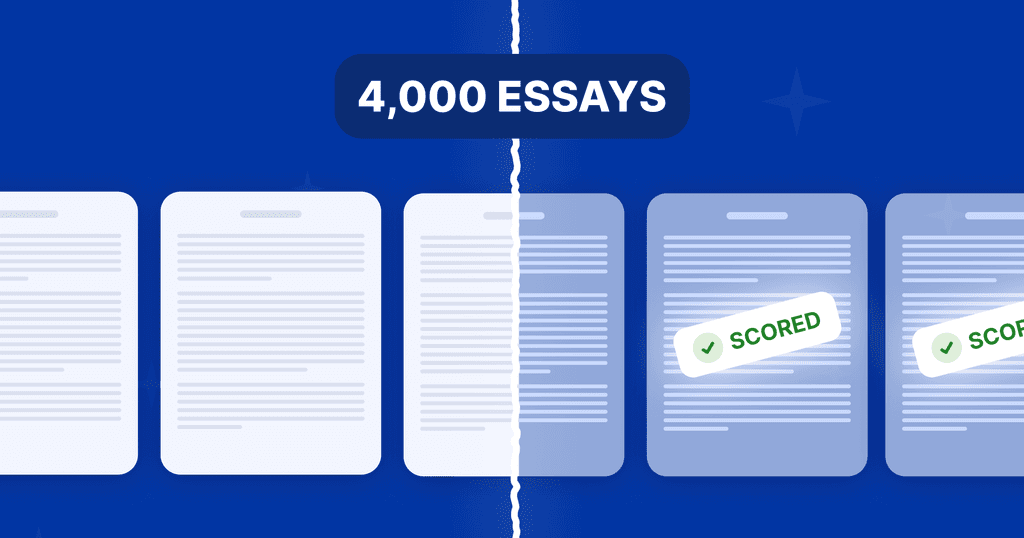
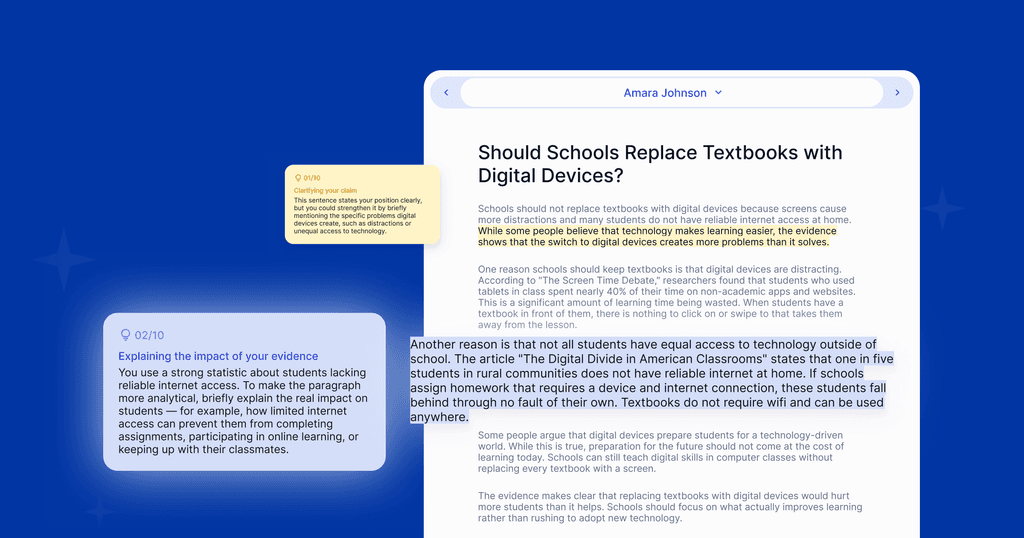
Implementing targeted checks for understanding ensures every student stays on track toward achieving core learning outcomes. You can use our digital AI essay grader as a teacher's assistant to analyze written responses quickly while maintaining rubric-based feedback quality.
Understanding formative and summative assessment examples
Formative and summative assessment examples serve distinct instructional purposes in modern educational settings. A low-stakes pre-assessment or daily exit slip measures ongoing understanding, while a final exam or high-stakes benchmark measures overall cumulative mastery.
Traditional summative assessment examples focus on final performance evaluation through formal grading rubrics or letter grades. Standard evaluations such as unit exams and standardized tests measure end-of-term retention. To see how both approaches work together in your curriculum, review our complete guide on summative assessment examples.
Verbal and interactive types of formative assessments
Interactive types of formative assessments deliver rapid verbal insights without adding to your evening grading stack. Engaging students in structured dialogue encourages collaborative thinking and reveals student reasoning in real time.
1. Think-pair-share
Think-pair-share prompts students to respond to open-ended questions individually before conferring with a partner. This structure helps activate prior knowledge and gives quiet learners a safe space to test their ideas before whole-class discussions.
2. Jigsaw cooperative learning
The jigsaw technique splits complex topics into manageable sections assigned to specialized student sub-groups. Group members master their assigned chunk, teach their peers, and deliver constructive peer feedback to ensure collective mastery.
3. Thumbs up/thumbs down visual signals
Non-verbal hand signals offer an instant snapshot of class comprehension during direct instruction. Asking students to display thumbs up/thumbs down gives you real-time data to decide whether to advance or re-explain key concepts.
Fast formative checks can preserve valuable instructional time for responding directly to student needs. For more quick wins in the same spirit, see grading tips for teachers.
Written formative assessment examples for students
Written formative assessment examples for students capture individual reflection and reveal exact reasoning processes. These concise writing tasks give quiet students a voice while creating clear diagnostic records for your gradebook.
4. Exit tickets and exit slips
Exit tickets and exit slips require students to answer a focused question in two minutes before leaving the room. Reviewing these quick exit slips helps you identify remaining learning gaps and target tomorrow's warm-up effectively.
5. One-minute papers
One-minute papers ask students to summarize the main lesson point and state their most confusing remaining question. Teacher assistants and instructors analyze these notes to evaluate whether core instructional goals were met.
6. Quick writes
Quick writes challenge students to write non-stop for two minutes on a prompt without worrying about mechanical errors. This activity encourages spontaneous critical thinking and reveals deep conceptual understanding across grades 3-12.
Visual representation methods in a list of formative assessments
Including visual tools in your list of formative assessments supports diverse multimodal learning styles. Graphic representations help students organize complex ideas without the barrier of dense written paragraphs.
7. Concept maps
Concept maps prompt students to diagram relationships between key terms using branching nodes and arrows. Visualizing concepts helps you spot missing structural connections in a student's mental model early in a unit.
8. Mini whiteboards
Mini whiteboards convert individual practice into an active whole-class response. Students solve math problems or define terms on handheld boards and raise them simultaneously, allowing you to scan the room instantly.
9. Traffic light reflection cards
Traffic light reflection cards encourage self-reflection by letting students color-code their confidence levels. Red cards indicate a need for immediate teacher support, yellow shows partial understanding, and green signals mastery.
Digital tools for modern formative checks
Leveraging modern digital assessment platforms automates response tracking and generates real-time feedback. Technology allows you to monitor individual student progress while saving precious preparation time.
10. Socrative digital quizzes
Socrative delivers interactive quizzes and polls directly to student devices. The platform formats multiple-choice questions and short responses into immediate analytics to guide your next instructional step.
11. Padlet interactive walls
Padlet offers a virtual bulletin board where students post thoughts and multimedia responses simultaneously. Peers can review each other's posts and leave constructive student feedback in a moderated space.
12. Google Forms exit checks
Google Forms provides customizable templates for quick digital checks and automated response tracking. Teachers easily review aggregated class graphs to pinpoint specific skills needing whole-group re-teaching.
13. Interactive classroom clickers
Classroom clickers collect anonymous votes on key concepts during interactive direct instruction. Removing social pressure encourages honest answers, giving you accurate data on overall class understanding.
Peer feedback and self-assessment strategies
Developing self-assessment skills shifts learning ownership directly to students. Teaching learners to evaluate their own progress fosters long-term metacognition and academic autonomy.
14. Peer assessment with structured checklists
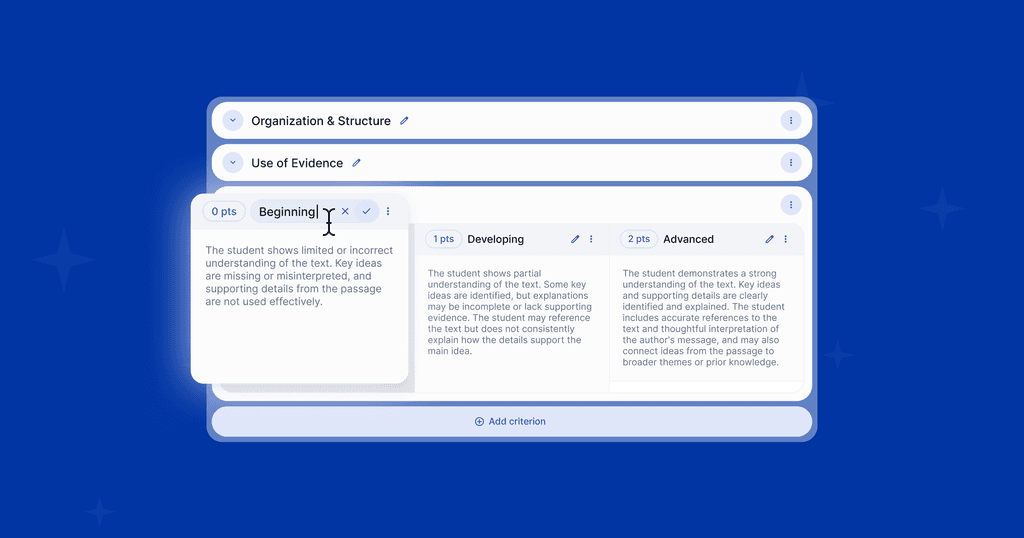
Peer assessment utilizes clear checklists and transparent rubrics to guide student reviews. Evaluating a classmate's work helps students internalize criteria and deepen their own student comprehension. Simplify your rubric creation using our automated rubrics generator guide.
15. Self-assessment logs and reflection journals
Self-assessment reflection journals prompt students to track growth over extended instructional units. Students log performance on short quizzes, analyze errors on homework assignments, and set actionable learning goals. For the fuller picture of what these tools deliver, see benefits of ai in education.
Streamline your daily classroom assessments with EnlightenAI
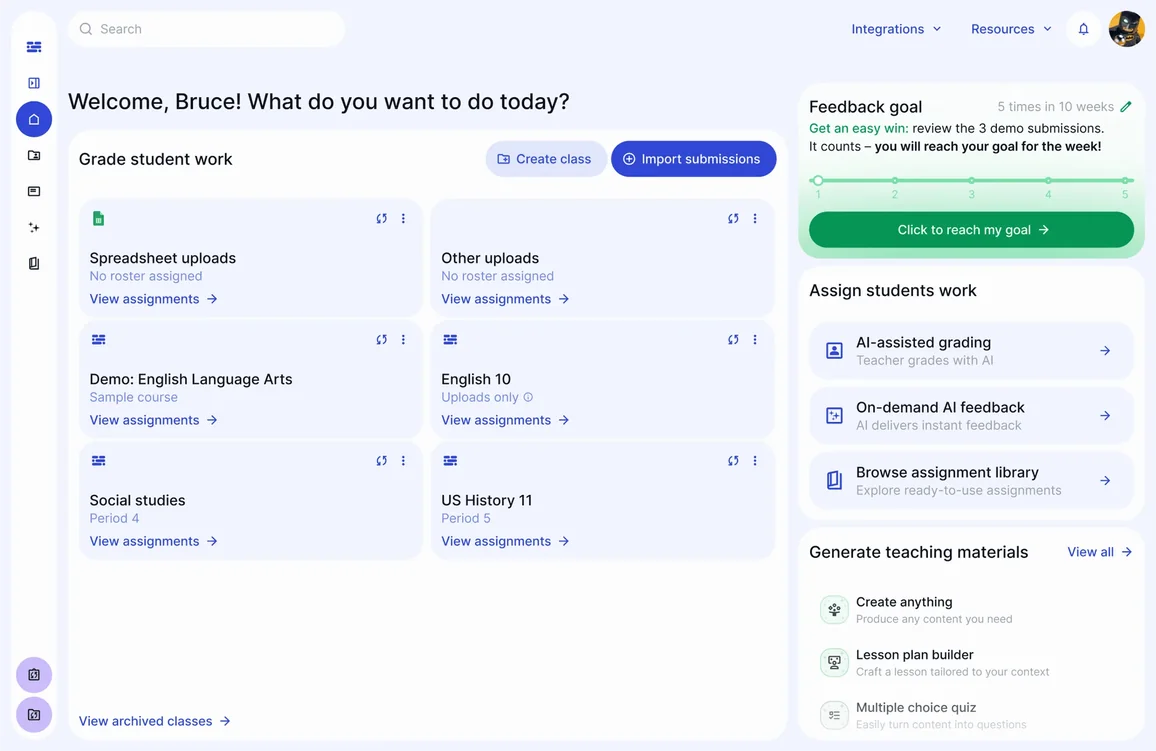
Managing continuous classroom checks while grading stacks of essays can quickly exhaust your time. Using an automated teacher's assistant platform accelerates feedback delivery so you can focus on active instruction. Discover how tools designed to streamline classroom checks transform how you evaluate student work without sacrificing rubric-based precision.
Start with the assignments already on your desk. Get started for free.
FAQs: Formative Assessment Examples
The primary types include verbal checks, written exit slips, visual concept maps, and digital quiz tools. Teachers select specific strategies based on lesson goals, available time, and targeted learning outcomes. Learn more about balancing these tools in our guide on summative assessment examples.
Teachers can download a printable formative assessment examples pdf from educational resource portals or export custom exit slip templates from word processors. Standardized printable sheets establish predictable daily check routines for grades 3-12.
Formative assessments guide learning through low-stakes feedback, while summative assessments measure final achievement. Formative tools evaluate real-time understanding during instruction, whereas summative tools assign final grades at unit completion.
Short quizzes serve as powerful formative checks when implemented for diagnostic feedback rather than major gradebook points. Reviewing results immediately allows teachers to address misconceptions before end-of-unit tests. Enhance your grading setup with our customizable rubrics generator workflow.