

Key takeaways
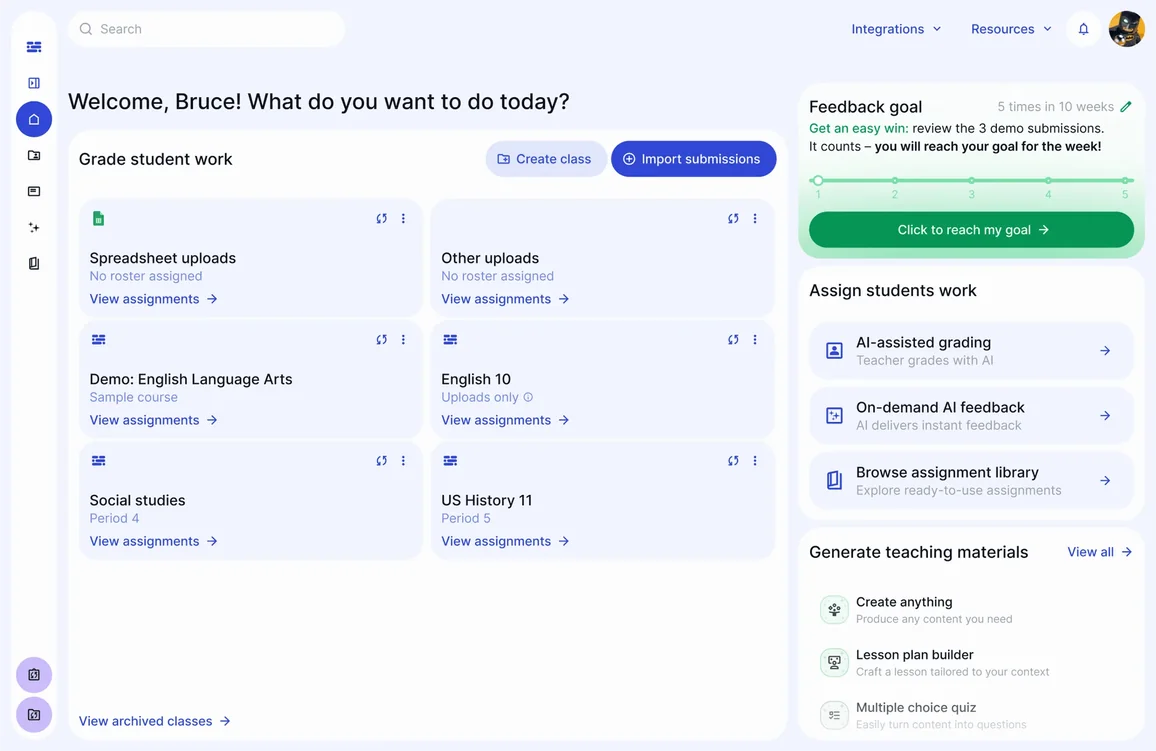
No single AI tool does everything well. The teachers who get the most from AI education tools run a stack of two to three: one grading tool, one planning tool, and one student-facing tutor.
EnlightenAI is the top pick for K-12 grading and writing feedback because it calibrates to the teacher's specific rubric, not a generic writing standard. It is the highest-ROI AI tool for most classroom teachers.
Introduction
Most lists of artificial intelligence tools for education are ranked by popularity or feature count. Neither of those tells a teacher which tool will hold up on a Tuesday afternoon with 35 essays to grade. This guide evaluates 10 AI educational tools by a single test: does the output reduce the teacher's workload without adding a hidden review step that cancels the time saving?
The result is an honest set of verdicts. Some tools do one thing exceptionally well and fall apart outside that use case. EnlightenAI is #1 because grading and writing feedback is where K-12 teachers spend the most unrecoverable time, and it is the most accurate tool in the category for that specific job. See ai grading tool for teachers for the specifics before reading the full list.
Teachers looking specifically for an ai essay grader for teachers can also compare how rubric-calibrated grading differs from generic AI scoring. For a narrower list focused specifically on the top picks, see best ai software for teachers.
How we evaluated these AI education tools
Five criteria, weighted in order of importance for K-12 teachers specifically. The weighting reflects what teachers actually lose time to, not what makes a good product demo. Every tool runs on generative AI, but none require prompt engineering, the setup happens through onboarding and calibration.
Grading and feedback accuracy. Does the output require significant rewriting before it can be returned to students? Tools that generate a usable first pass ranked higher than tools that generate plausible-sounding output the teacher still has to score.
Student data privacy. Does the tool hold a recognised certification (FERPA, COPPA, CSPC), not just a privacy policy page? For any school-level use, certification is the minimum bar.
Grade level fit. Is the tool designed for K-12, or is it a general-purpose AI adapted for education? Tools built for adult academic writing tend to underperform at grades 3-8.
Free tier usability. Can a solo teacher get genuine classroom value before a district purchase order? A free tier that runs out in three submissions is not a free tier.
Integration with existing tools. Does it connect to Google Classroom, Canvas, or whatever LMS the school already uses? Tools that add a new workflow without connecting to the existing one add switching cost rather than saving it.
AI tools for education covered in this guide
Ten tools evaluated across five categories: grading and rubrics, lesson planning and administrative tasks, differentiated content, student-facing tutoring, and assessment. Competitor names appear in the tool entries below only.
MagicSchool AI
Khanmigo
Diffit
Brisk Teaching
Gradescope
Curipod
Formative
SchoolAI
Taskade
Each is evaluated against the five criteria above. The evaluation criteria that most teachers get wrong is #1 and #3: grading accuracy and grade level fit. Most AI education tools are stronger on #4 and #5 because those are easier to market.
The 10 best AI tools for education in 2026
1. EnlightenAI
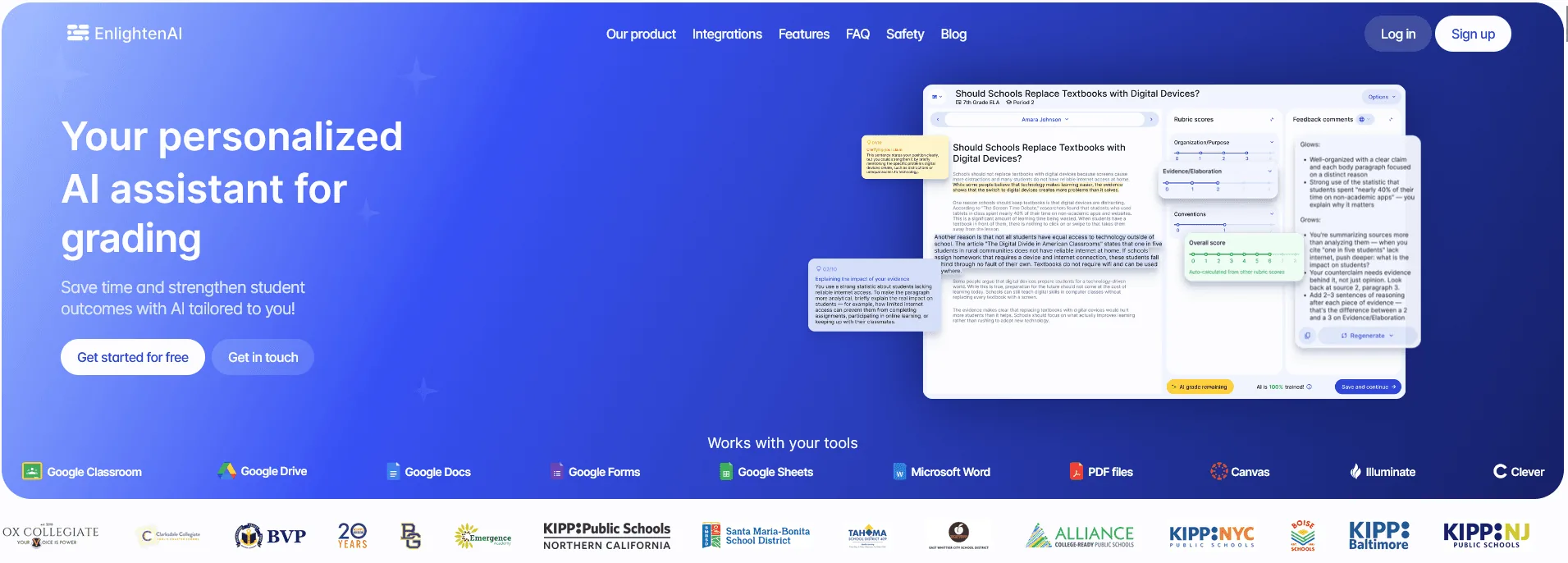
EnlightenAI earns the top position because grading and writing feedback is where K-12 teachers lose the most unrecoverable time, and it is the most accurate tool for that job. It calibrates to the teacher's own rubric, training a TA on the first five graded submissions to grade the rest in the teacher's voice. It integrates with Google Classroom, Canvas, and Microsoft Word, and is iKeepSafe certified for FERPA, COPPA, and CSPC.
In a study with DREAM Charter Schools, EnlightenAI scored 0.77 QWK alongside a teacher vs. 0.52 for teacher-to-teacher agreement on the same work. Most scores require a confirm, not a correction. The permanent free plan covers the full grading workflow with no monthly cap. Read how EnlightenAI measures grading accuracy for the benchmarked data.
If you are interested in the research itself, you can also explore what makes ai grading accurate and why calibration matters so much. This same calibration process is exactly why how expert teachers build rubrics matters so much before you ever run a batch through EnlightenAI.
Grades 3-12, deepest coverage in ELA and humanities.
Permanent free plan, no monthly cap, no credit card required.
iKeepSafe FERPA, COPPA, and CSPC certified. Student data never used to train models.
Best for: K-12 teachers whose primary AI need is grading and writing feedback that reflects their own rubric standard.
2. MagicSchool AI

MagicSchool AI is the broadest AI toolset for teachers, with over 80 tools covering lesson planning, rubric generation, IEP drafting, and parent emails. Its strength is coverage, not depth: every tool is a one-shot form with no persistent memory. SOC 2 Type II, FERPA-aligned, with a free tier covering the core tools. For a broader roundup of no-cost options, see free ai tools for teachers.
Best for: teachers who want a broad library of AI lesson planning and admin tools without a steep learning curve.
3. Khanmigo
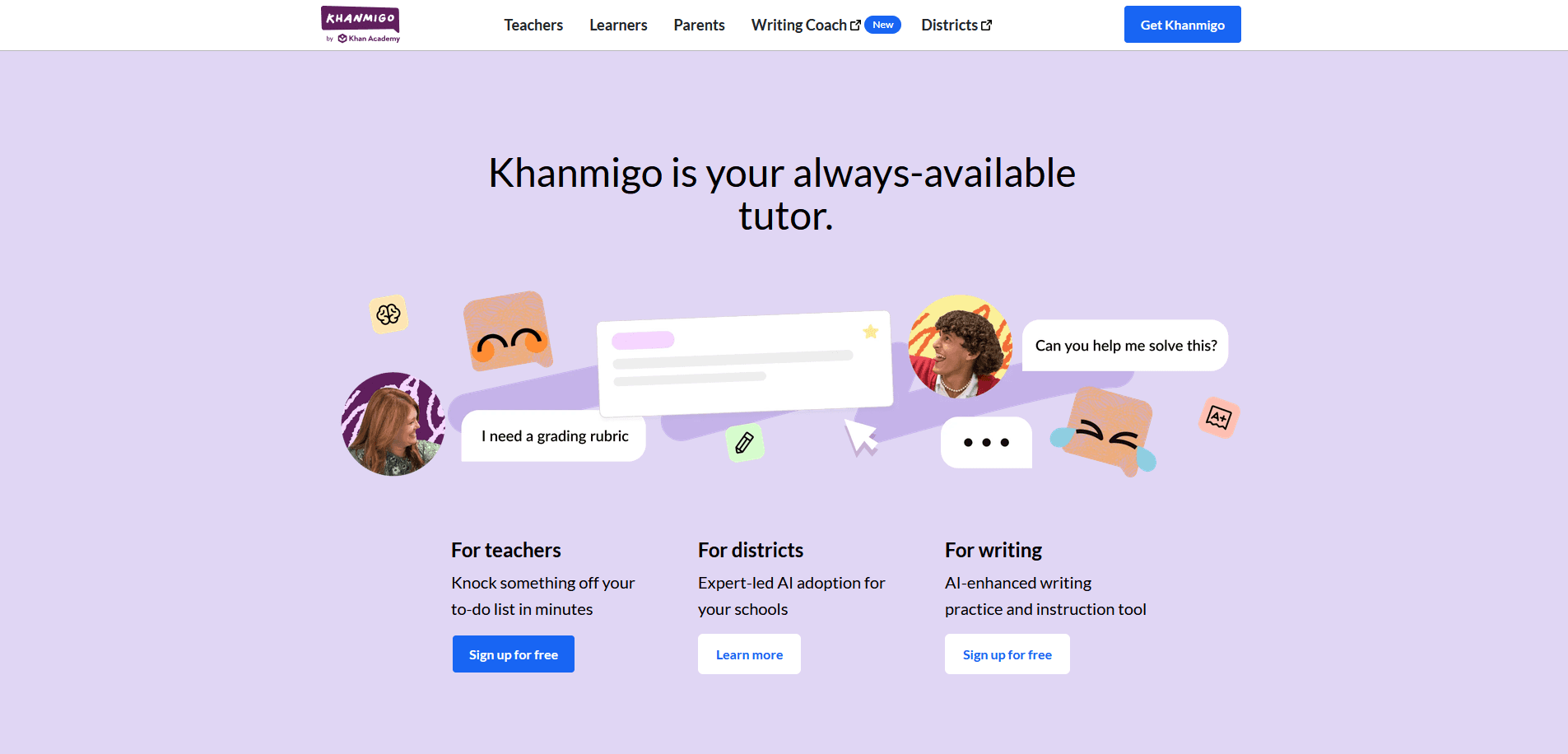
Khanmigo is the best student-facing AI tutor in the K-12 category by a wide margin, built on a Socratic model that guides students through their reasoning rather than giving direct answers. Free for US educators since 2024. Strongest in math and science, quality drops outside Khan Academy's content library.
Best for: math and science teachers who want a safe, student-facing AI tutor that guides reasoning rather than answers directly.
4. Diffit
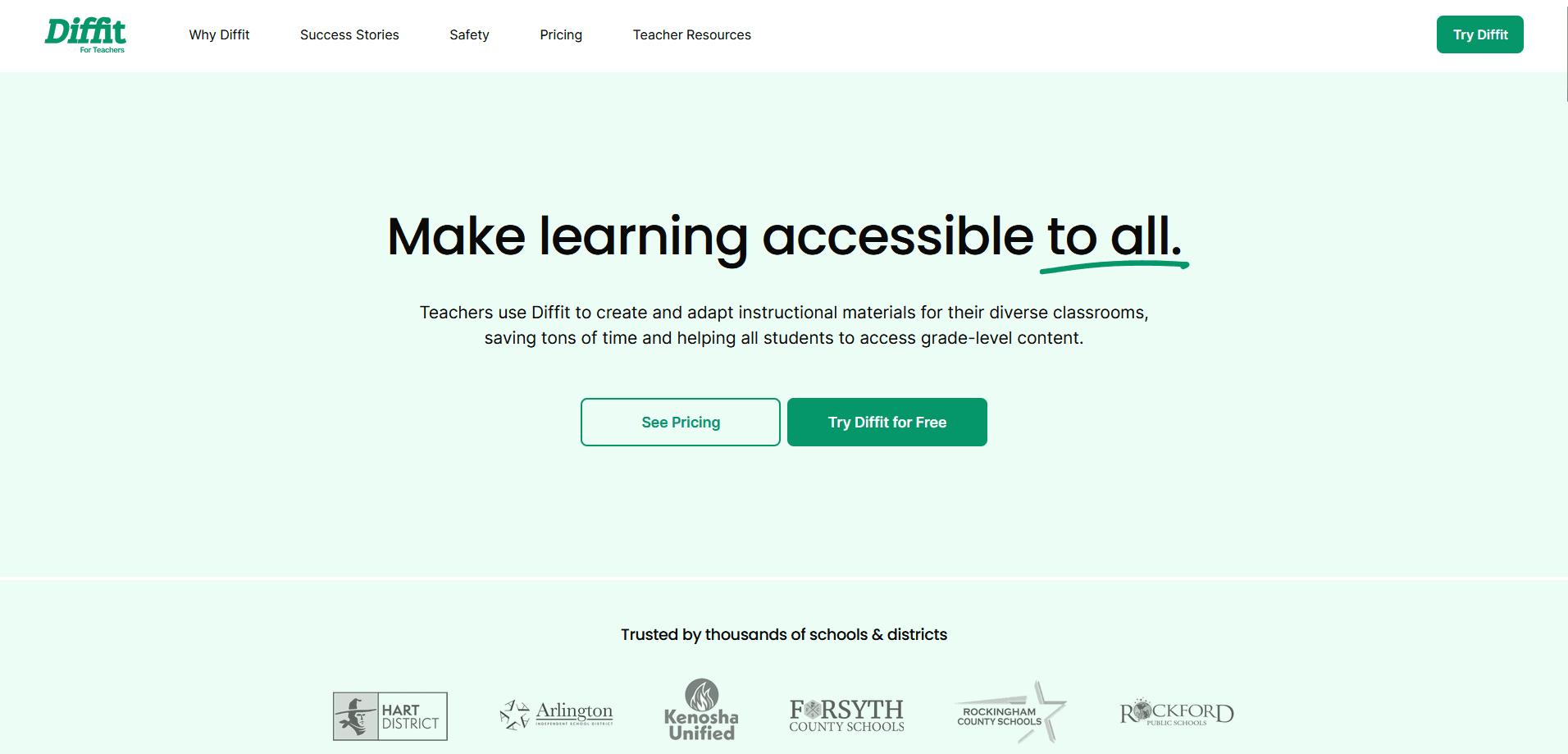
Diffit takes any source text, article, PDF, or YouTube transcript and produces a leveled reading passage with vocabulary, comprehension questions, and summaries at any grade level from 1 to college. No other tool on this list matches it for differentiation: a single source article becomes five reading-level versions in under a minute. Scope is narrow by design. It is a content differentiation tool, not a grading tool, not a planner, not a tutor. Free tier is genuinely usable.
Best for: ELA teachers, ESL teachers, and any classroom with mixed reading levels who need differentiated passages from a single source.
5. Brisk
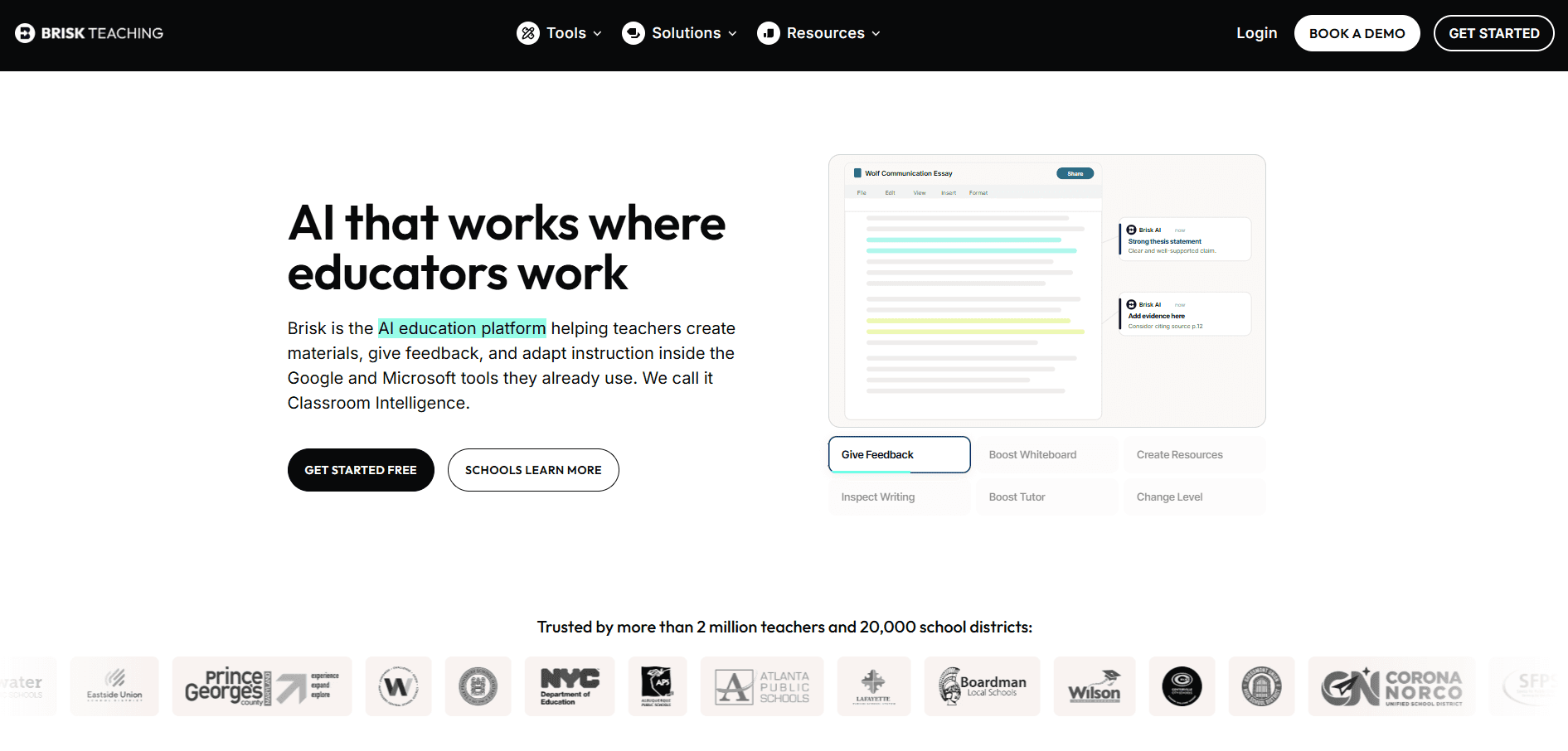
Brisk Teaching generates rubric-criteria feedback on student writing inside Google Docs via a Chrome extension, without leaving the document. It does not assign a score, which means it is a writing feedback tool rather than a grading tool. Useful for teachers who want fast AI-assisted comments while retaining full control over the grade. For schools on Canvas or Microsoft-first workflows, the Google Docs dependency limits the value significantly.
Best for: Google Classroom teachers who want fast inline essay feedback and plan to assign the grade themselves.
6. Gradescope
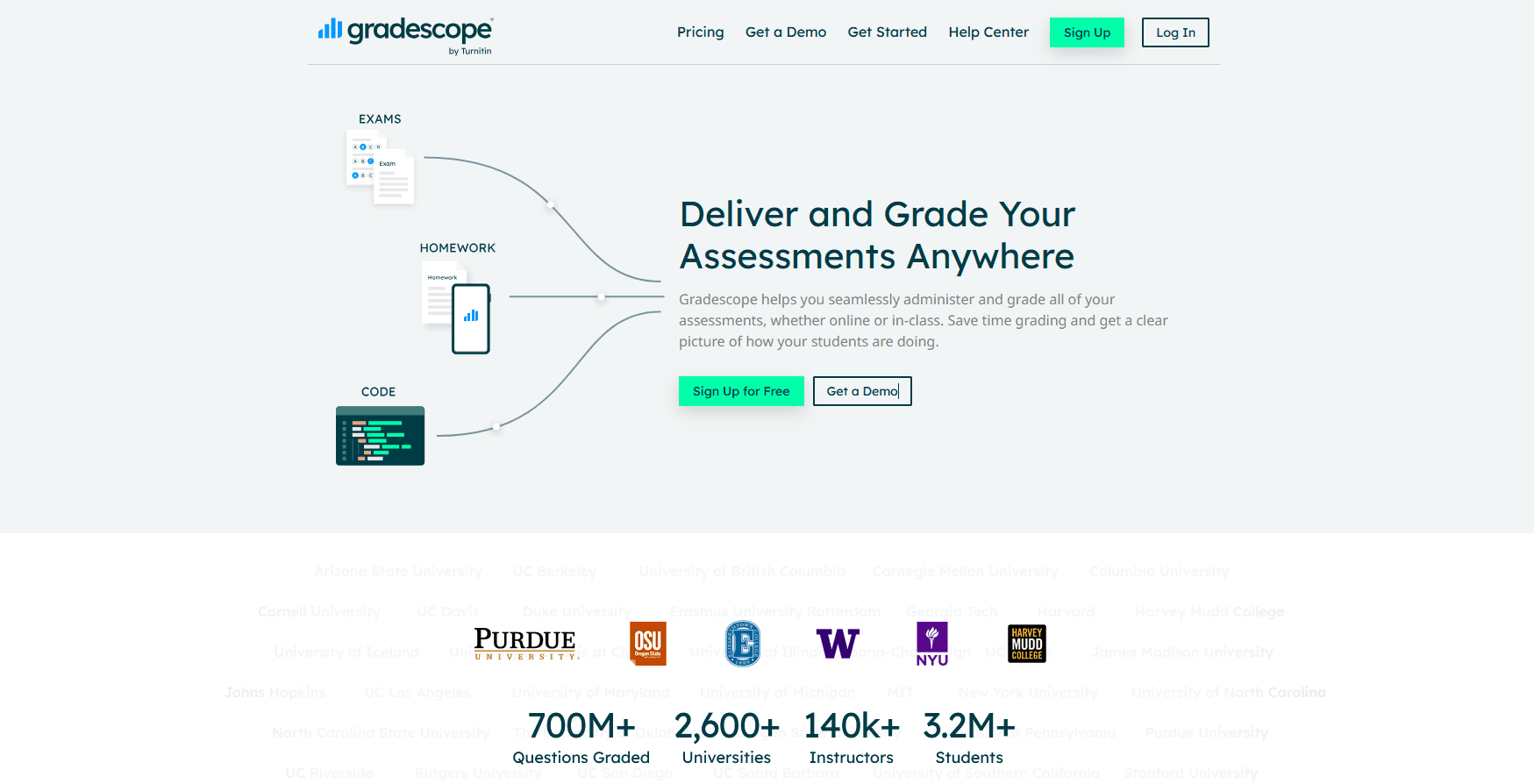
Gradescope is the institutional standard for structured grading at scale: exams, problem sets, short-answer work, and handwritten submissions across an entire department. Its answer-grouping feature applies one graded example across a group of similar responses, an efficiency that only appears at high volume. Setup overhead is real. Not designed for individual K-12 classroom use, and not the right tool for open-ended essay grading. For a closer look at the companies behind this category, see leading ai teacher tool companies.
Best for: STEM departments and schools grading structured exams and problem sets at institutional scale.
7. Curipod
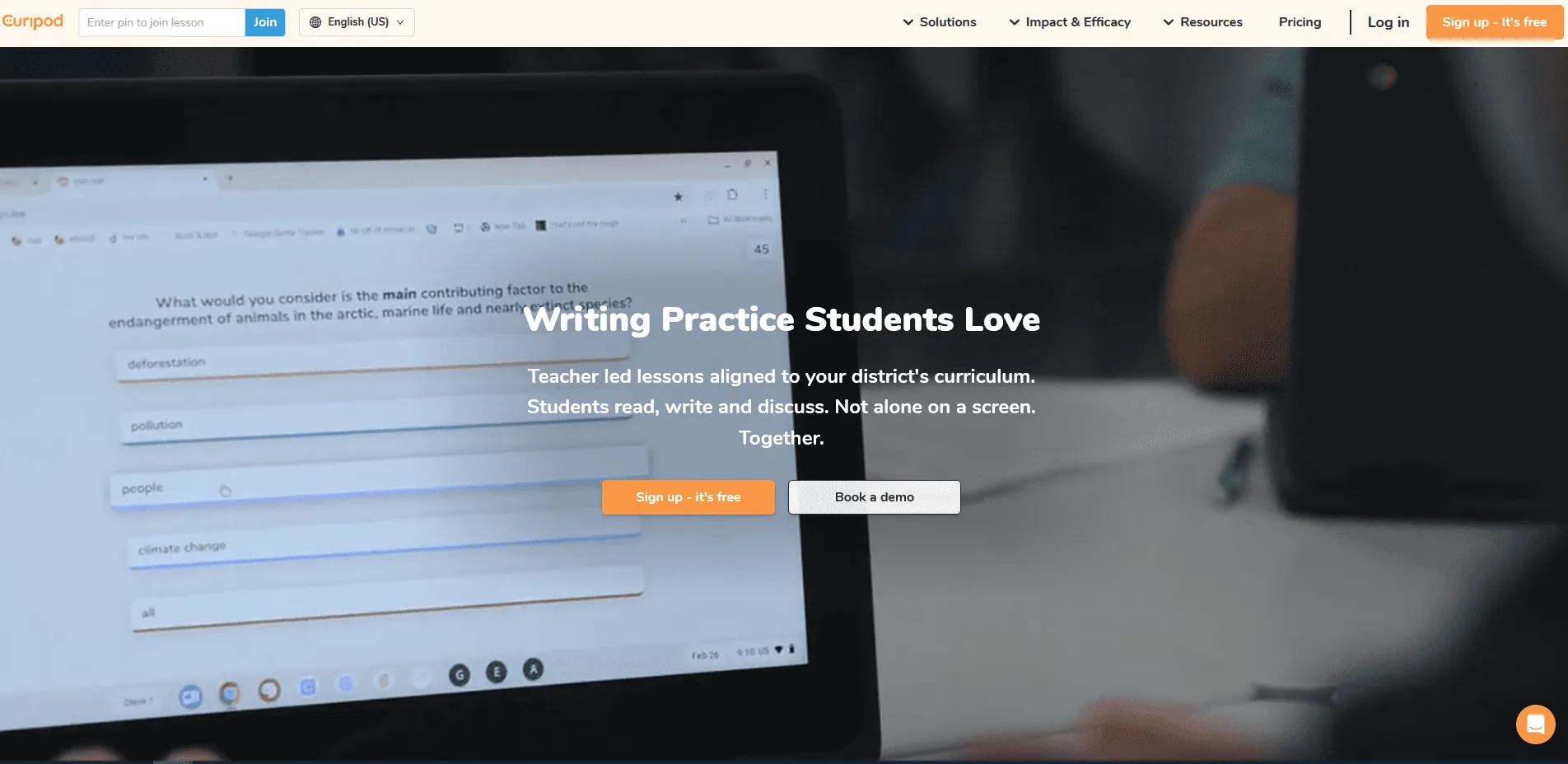
Curipod generates interactive classroom lessons from a single prompt: polls, word clouds, open questions, and exit tickets, ready to present to the class. It is the only tool on this list designed to generate student engagement during the lesson rather than reduce teacher workload before or after it. Free tier is usable; presentation-shaped rather than curriculum-shaped.
Best for: teachers who run lessons as live sessions and want AI-generated student interaction baked in from the start.
8. Formative
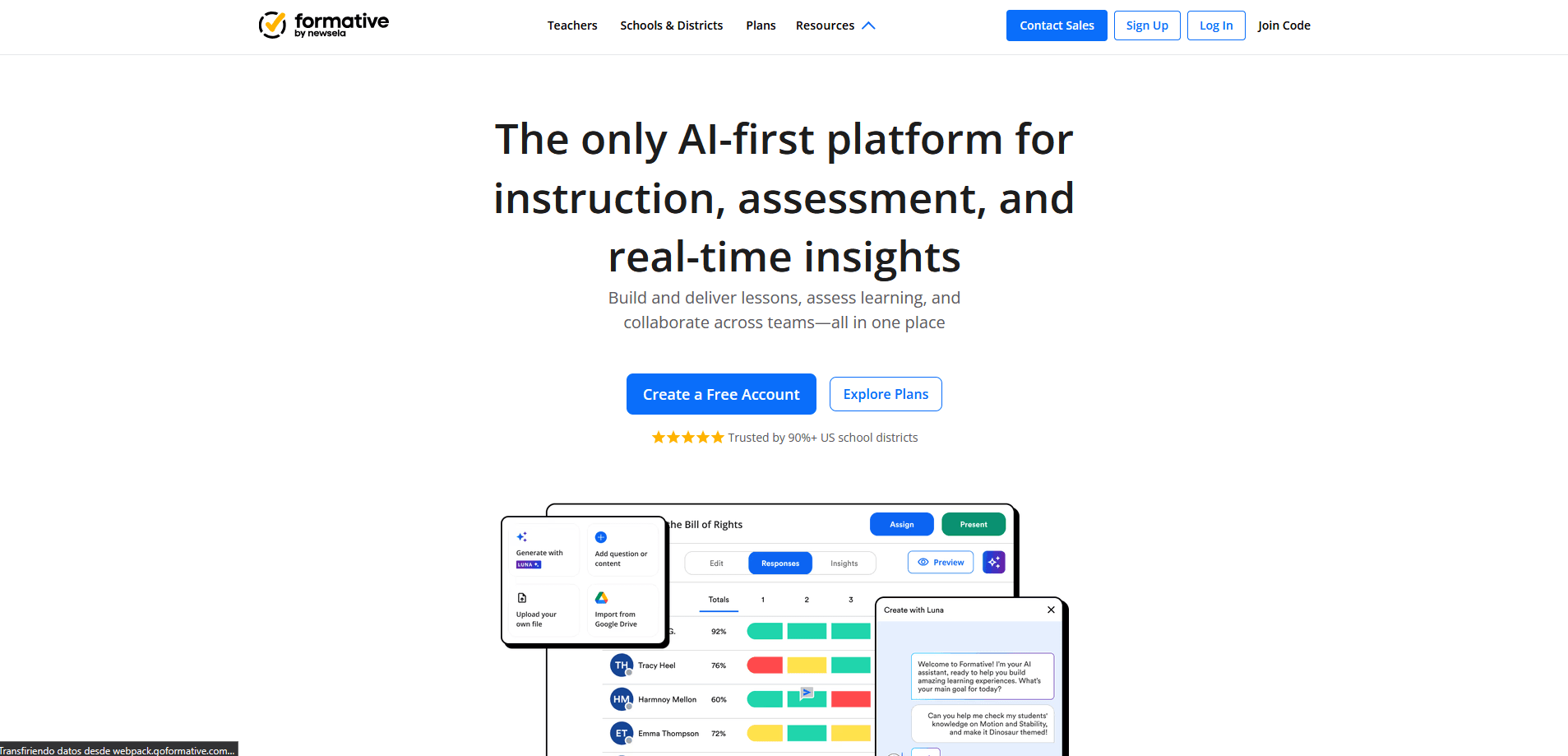
Formative turns any worksheet or assignment into a live, auto-grading digital activity with a real-time teacher view of student progress. The live classroom visibility is the differentiating feature: you see which students are stuck before the lesson ends, not after you grade the exit tickets the next morning. Free tier is limited; paid plans are required for full question variety and auto-grading.
Best for: teachers who want real-time visibility into student progress during a lesson, not just a grade after the fact.
9. SchoolAI
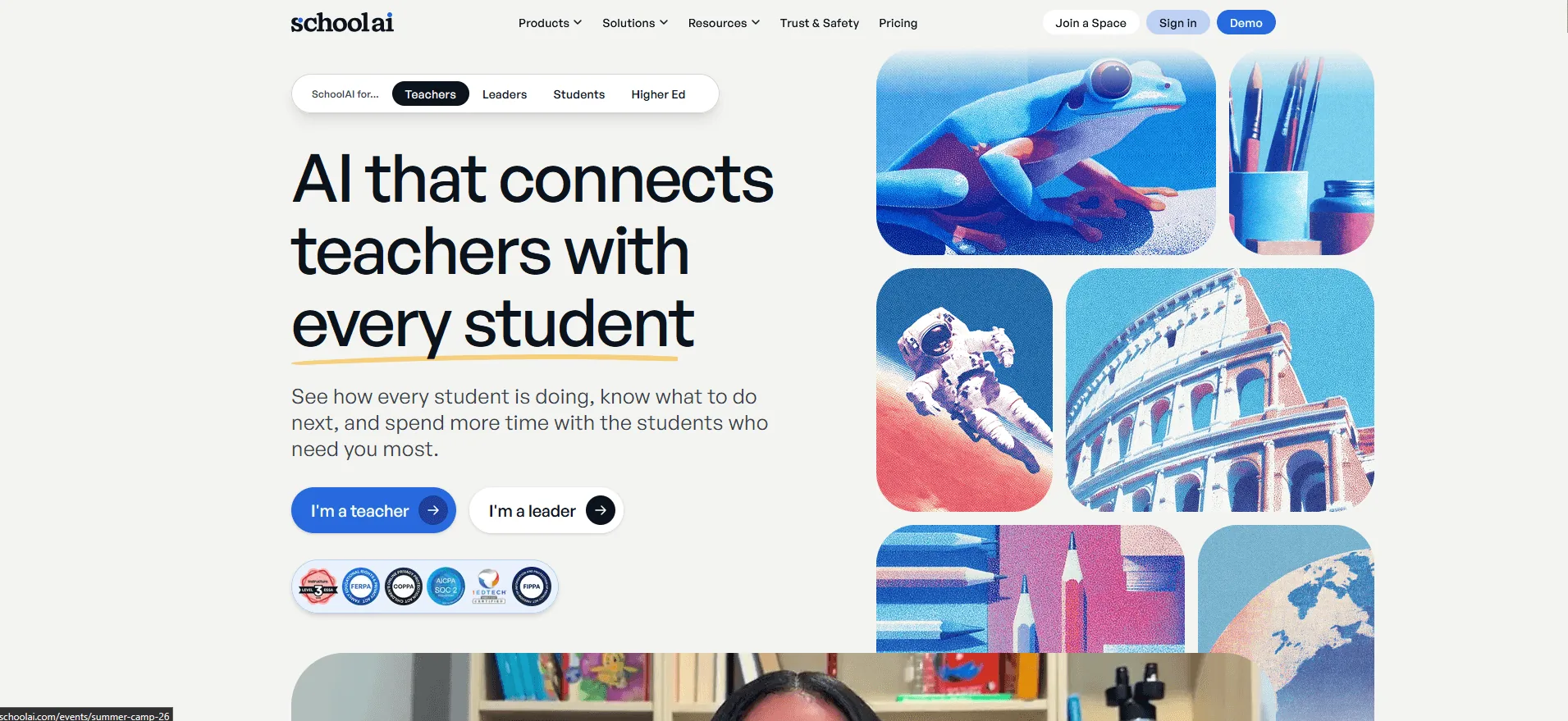
SchoolAI gives teachers dashboard visibility into what students are doing with AI chat assistants in real time, with content filters and approval controls. It is the only tool on this list designed specifically for supervised student AI use, which matters as schools start building student AI literacy while keeping supervision in place. Still maturing; best for schools that have decided students should have AI access and want the teacher to retain visibility.
Best for: schools introducing supervised student AI access for the first time who want teacher dashboards and content controls.
10. Taskade
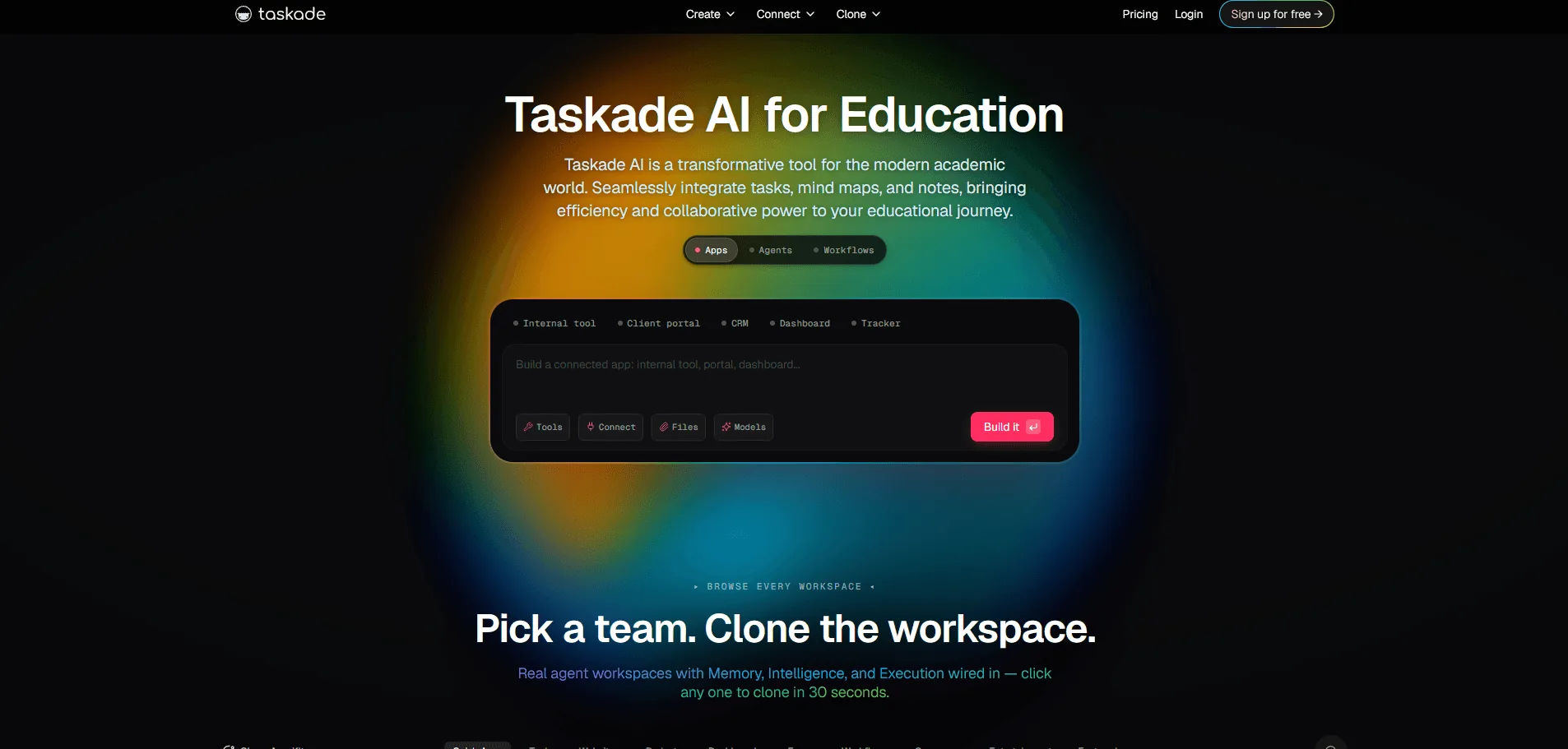
Taskade is an all-in-one workspace that combines lesson planning, classroom management, AI agents, and parent communication in one platform. Its strength is consolidation: one login instead of six, with agents that retain context across the semester. The tradeoff is that it is not built for K-12 grading, so teachers who need grading support will find EnlightenAI more accurate for that job. Strong free tier.
Best for: teachers who want to consolidate lesson planning, classroom management, and parent communication into one workspace.
The right AI education tools for your grade level
Grade level determines which tools in this list actually deliver value. The stack that works for a high school ELA teacher is not the same one that works for a grade 4 homeroom teacher. Here is the practical split.
Elementary school, grades 3-5
EnlightenAI is the only AI grading tool in this guide specifically designed for grades 3-5, where most AI defaults to adult academic standards and over-penalises younger writers. Pair it with Diffit for differentiated reading passages and Khanmigo for math support. Avoid tools that require students to type extensively: Curipod and Formative work for structured exit tickets, but open-ended student AI tools are a poor fit at this level. Read consistent feedback in early grades for what grade-calibrated AI feedback looks like at this level.
Teachers working with accommodations and individualized support plans may also find value in ai feedback for special education. Teachers supporting students with attention-related challenges can also explore ai tools for teachers with adhd students.
Middle school, grades 6-8
Grading loads increase significantly at this stage. EnlightenAI for writing feedback, Khanmigo for math tutoring, and Curipod for interactive lessons covers 80% of a middle school teacher's AI needs without adding unmanageable complexity. SchoolAI is worth adding if the school is ready to give students supervised AI access. Brisk is a viable add-on for ELA teachers who live in Google Docs.
High school, grades 9-12
High school is where the full stack pays off. EnlightenAI for essay grading across AP and IB rubrics, Gradescope if the school runs structured exams at scale, MagicSchool for lesson planning and rubric generation, Khanmigo for student math and science support. Read grading consistency across a district for how high school departments scale AI grading across multiple classrooms. For the school-purchasing side of this decision, see grading software for schools.
What no single AI education tool does well
The most useful thing any list of AI tools for education can tell you is what none of them do. Every tool on this list has a use case where it is genuinely excellent and a use case where it quietly fails. Knowing the failure modes before adoption prevents the drop-off that happens when a teacher tries a tool, finds it does not work for their specific job, and stops using AI entirely.
No tool on this list grades the way you grade without calibration. Generic AI output reflects a generic standard. The calibration step, five graded submissions with EnlightenAI, context setup with Diffit, tone guidelines with MagicSchool, is the difference between output you return and output you rewrite. For a closer look at this process, see our guide to training your ai teaching assistant before introducing AI into your grading workflow.
No tool replaces the review step. The best AI education tools shift the teacher's job from composing feedback to reviewing it. That is a meaningful time saving. But the review step is not optional, because the AI does not know the student, does not know the class context, and does not know the deliberate choices embedded in the student's writing.
No single tool does everything well. The teachers who get the most from AI education tools run a focused stack: one grading tool, one planning tool, and one student-facing option. Two to three tools used consistently outperform seven tools used occasionally. For the fuller picture of what AI actually delivers in a classroom, see benefits of ai in education.
Grade your next stack against your own rubric with EnlightenAI
If you have ever spent Sunday evening catching up on essays that were supposed to be returned Friday, you know the real problem is not just the time, it is that the review still falls on you. A rubric-trained TA grades against your standard, which means the feedback you return sounds like yours because it was calibrated to yours.
Start with the assignments already on your desk. Get started for free.
FAQs: Best AI Tools for Education
AI in education is not one-size-fits-all: for K-12 teachers, the answer depends on the job. For grading and writing feedback, EnlightenAI is the most accurate option because it calibrates to the teacher's rubric rather than applying a generic standard. Most effective K-12 teachers run a stack of two to three tools rather than looking for one that does everything, because no single AI tool for education does every job well. See how expert teachers build rubrics as a starting point before adopting any grading tool.
Several tools on this list offer free tiers that cover real classroom workflows, not just three-submission trials. EnlightenAI's free plan is permanent with no monthly cap. Khanmigo is fully free for US educators. MagicSchool AI's free tier covers the core tool library. Diffit's free tier is usable for a solo teacher without a district license. The distinction to check before adopting any free tier is whether it covers a full class set or runs out mid-unit. Read ai grading tool for teachers for how EnlightenAI's free plan works.
Privacy posture varies widely across the AI education tools category, and a published privacy policy is not the same as a formal certification. The minimum bar for school-level adoption is a FERPA certification and a Data Privacy Addendum the district can sign. EnlightenAI is iKeepSafe certified for FERPA, COPPA, and CSPC, and does not use student submissions to train its models. Before entering student work into any tool, verify the certification and your district's AI acceptable use policy. See EnlightenAI's student data safety practices for the full detail.
Two to three is the consistent answer from teachers who still use AI in April. One grading tool, one planning tool, and one student-facing option covers the majority of a teacher's AI needs. Teachers who adopt seven tools at once tend to abandon all of them before the semester ends because the context-switching cost is higher than the time saving. The stack that compounds is the boring one: one tool added and mastered before the next is introduced. Read ai tools for teachers with adhd students for how the stack applies in differentiated classroom contexts.