

Key takeaways
Reclaim daily instructional time: Establishing structured systems for prep and administrative tasks prevents contract hours from overflowing into your evenings.
Batch routine grading and planning: Grouping similar tasks together reduces contextual switching and accelerates weekly workflow execution.
Protect personal well-being: Setting firm boundary lines around communication and workload prevents chronic physical and mental fatigue.
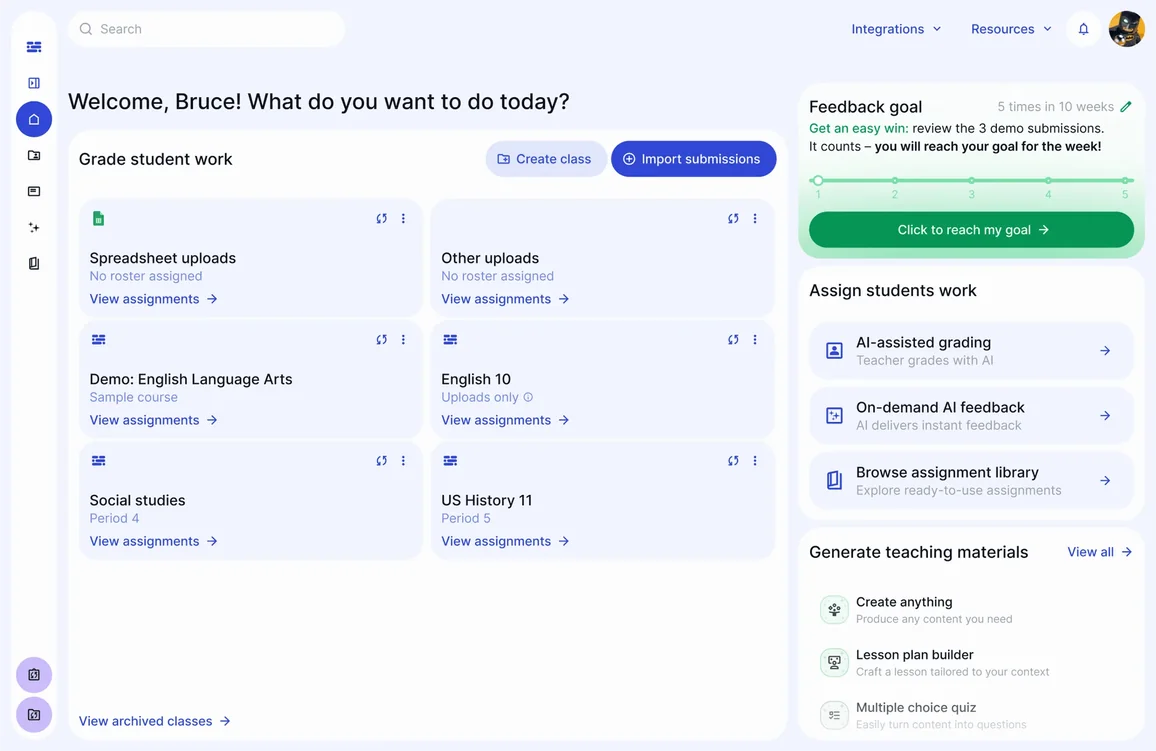
Leverage digital assistant tools: Automating rubric-based grading and lesson organization frees up valuable energy for direct student support.
Introduction
Mastering teacher time management is the most effective way to protect your personal life while maintaining instructional excellence in grades 3-12 classrooms. Balancing daily lesson planning, endless stacks of paper, and administrative duties often leaves educators exhausted before the final bell rings.
Implementing practical systems turns chaotic school days into predictable workflows. Addressing the root causes of teacher burnout requires structured habits that streamline administrative demands and safeguard your precious instructional time. For the bigger picture of what these tools deliver, see benefits of ai in education.
Why teacher time management is essential for classroom success
Effective time management strategies for teachers create the foundation for sustainable teaching careers. Without clear routines, non-instructional demands constantly erode your planning time, forcing you to take work home night after night.
Developing strong time management skills directly improves classroom instruction. When you spend less energy reacting to immediate crises, you gain the focus needed to deliver high-quality feedback, build stronger student relationships, and refine your pedagogy.
Top 10 time management strategies for teachers
Applying targeted time management techniques restores control over your daily schedule. These ten practical methods help both veteran educators and new teachers optimize their working hours.
1. Batch your work and lesson preparation
Batching routine tasks eliminates the friction of switching focus between completely different activities throughout the day. Dedicate one block of time exclusively to drafting upcoming lesson planning units rather than writing plans bit by bit every afternoon.
Grouping similar tasks allows you to finish preparation faster without losing cognitive momentum. When you batch your work, you complete an entire week of materials in a single focused session.
2. Streamline how you grade assignments
Evaluating student papers item by item consumes hours of non-instructional time. Focus on providing rubric-based, actionable feedback on key milestones rather than marking every minor detail on every page.
Using an automated digital teacher’s assistant accelerates feedback delivery. Integrating a modern AI essay grader allows you to evaluate long-form writing using specific criteria so you can finish grading assignments during contract hours. For more ways to speed up this step, see grading tips for teachers.
For the fundamentals of the grading process itself, see how to grade a paper from start to final grade.
3. Prioritize tasks using the Eisenhower matrix
Sorting your daily responsibilities prevents urgent demands from overshadowing long-term goals. The Eisenhower matrix categorizes your workload into four distinct quadrants based on what is truly urgent and important.
Streamlining your daily decision-making keeps your focus on high-impact instruction. Use this matrix to identify tasks you can postpone, delegate, or eliminate entirely from your master to-do list.
4. Implement the Pomodoro technique during prep periods
Working in short, highly focused intervals prevents fatigue during open planning periods. The Pomodoro technique breaks your prep block into twenty-five minutes of concentrated work followed by a five-minute break.
Structuring short work sprints maintains high productivity throughout the day. Keeping your momentum during planning periods stops administrative tasks from lingering into your evenings.
5. Schedule your week with time blocking on Google Calendar
Assigning dedicated calendar blocks to specific tasks protects your contract hours. Utilizing time blocking ensures that administrative duties, family calls, and lesson reviews have explicit start and end times.
Visualizing your workload on Google Calendar prevents overcommitting your available hours. Setting visual limits keeps your daily responsibilities manageable and structured.
6. Strengthen classroom management routines
Establishing predictable student procedures saves countless instructional minutes every day. Clear routines for entering the room, turning in work, and transitioning between activities preserve your time for direct teaching.
Proactive systems reduce classroom disruptions before they occur. Implementing robust classroom management frameworks ensures that students manage their own materials while you focus on instruction.
7. Delegate routine classroom responsibilities
Assigning daily jobs to students builds classroom ownership while freeing up your time. Tasks like passing out papers, managing lab supplies, and organizing whiteboards do not require your direct expertise.
Distributing routine chores keeps the physical classroom running smoothly. Empowering students to handle logistical tasks gives you extra moments to organize materials for the next period.
8. Optimize professional development and team meetings
Preparing clear agendas before attending meetings keeps collaborative sessions focused and brief. Active participation in structured teacher training and professional development should offer practical strategies that immediately simplify your workload.
Collaborating efficiently with grade-level peers prevents duplicate effort. Share resource creation duties with colleagues so everyone spends less time building unit materials from scratch.
9. Use digital checklists for recurring weekly tasks
Standardizing routine procedures eliminates the mental energy required to remember small steps. Creating reusable digital checklists for end-of-week routines ensures nothing falls through the cracks.
Systematizing recurring admin tasks speeds up Friday afternoon wrap-ups. Having a clear checklist lets you close out your classroom quickly and start your weekend on time. For more no-cost options worth trying, see free ai tools for teachers.
10. Leverage specialized educational technology
Adopting purpose-built digital tools automates repetitive clerical work. Implementing modern software helps you track student performance, organize units, and generate rubric resources effortlessly.
Exploring advanced digital platforms provides robust time management techniques for educators. Discover how automating your grading workflows allows you to provide quick, specific student guidance without staying late. For a wider comparison of options, see best ai software for teachers.
For district leaders, pairing these approaches with proven teacher retention strategies can help protect educator time over the long term.
An ai essay grader can help protect planning time from growing grading backlogs.
Setting clear boundaries and protecting your planning time
Protecting your personal time requires establishing firm boundaries around work availability. Achieving a healthy work-life balance means turning off email notifications after contract hours and reserving weekends for personal self-care.
Learning to protect your schedule is essential for long-term career satisfaction. When asked to join non-essential committees during busy grading cycles, empower yourself to learn to say no or set boundaries politely to safeguard your core teaching duties.
Streamline your grading workload with EnlightenAI
Managing lesson preparation alongside stacks of written essays can exhaust your weekly energy. Our teacher's assistant platform speeds up rubric feedback so you can focus on active instruction. For the school- or district-level version of this decision, see grading software for schools. Transform your daily workflow without sacrificing specific, rubric-based feedback quality.
Start with the assignments already on your desk. Get started for free.
FAQs: Teacher Time Management
The most effective strategies include task batching, time blocking on calendars, and using digital grading tools. Focusing on high-impact instructional needs while setting strict boundaries around contract hours keeps daily workloads manageable. Learn more about preventing fatigue in our guide on teacher burnout solutions.
New teachers build strong skills by adopting standardized routines and leveraging shared curriculum resources. Utilizing digital templates for lesson planning prevents reinventing materials every week.
Batching reduces cognitive fatigue by grouping similar administrative or planning tasks into dedicated blocks. Completing all parent emails or lesson outlines in one focused window is much faster than switching tasks repeatedly throughout the day. Accelerate your assessment setup using our rubrics generator guide.
Setting boundaries prevents professional obligations from creeping into personal evenings and weekends. Establishing fixed offline hours protects your mental health and restores your energy for the classroom.