
Most roundups for this keyword list every AI grading tool with a free tier and call it a ranking. That is not a ranking. That is a list with a number in front of it. A real ranking starts with a clear definition of what best means for the teacher doing the grading, and ends with a verdict you can act on rather than a table of features to decode yourself.
This list ranks five tools, names a clear top pick, and tells you exactly which situation each of the others is actually built for. Where a tool is a poor fit for classroom grading, it says so directly, because a recommendation that softens every limitation is not useful to a teacher making a real decision. See how rubric-calibrated AI grading tools for teachers differ from the generic category before reading the full comparison.
Five tools ranked by rubric scoring, feedback quality, LMS integration and real teacher fit.
MagicSchool AI
CoGrader
EssayGrader AI
Brisk
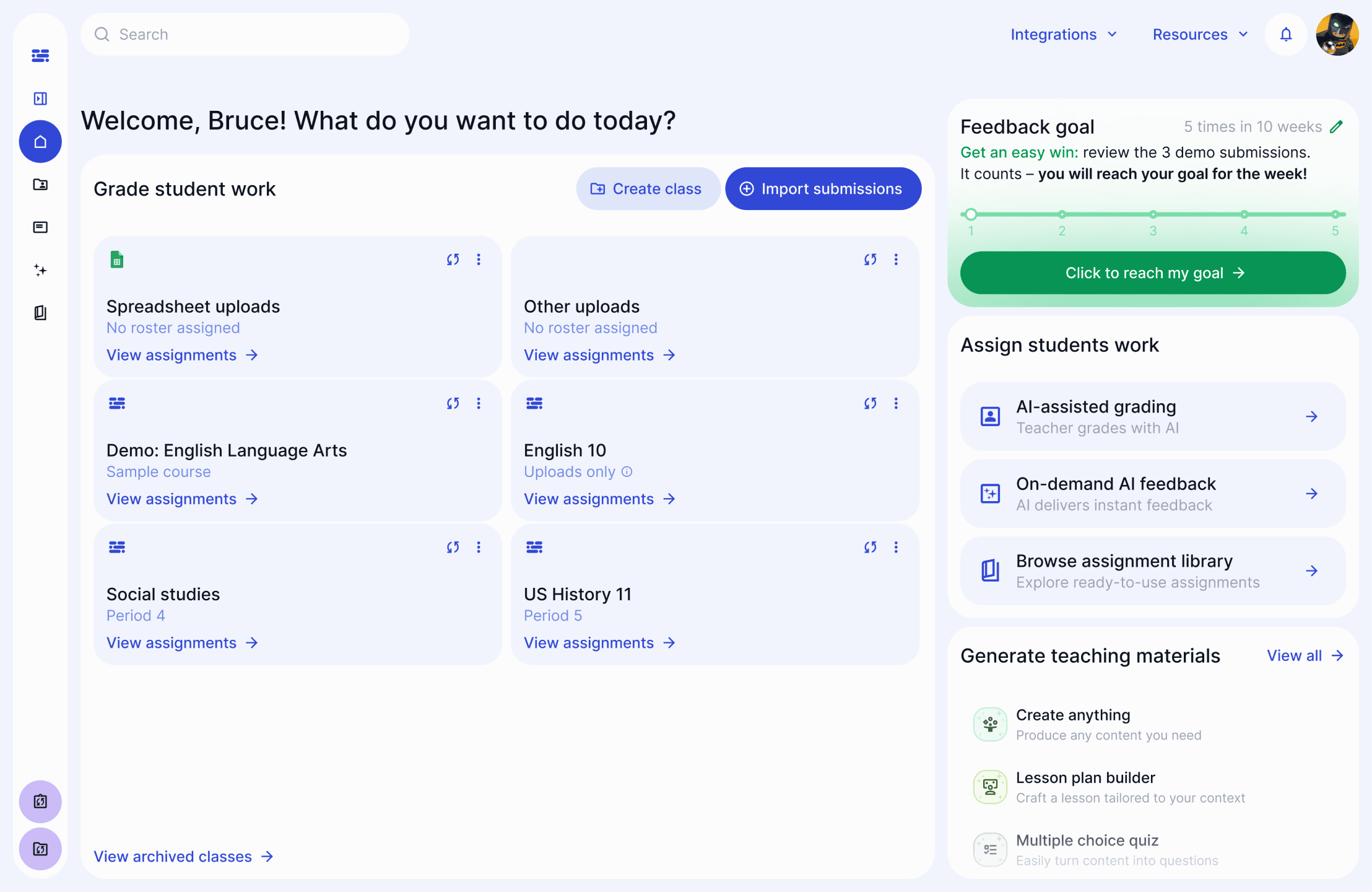
1. EnlightenAI
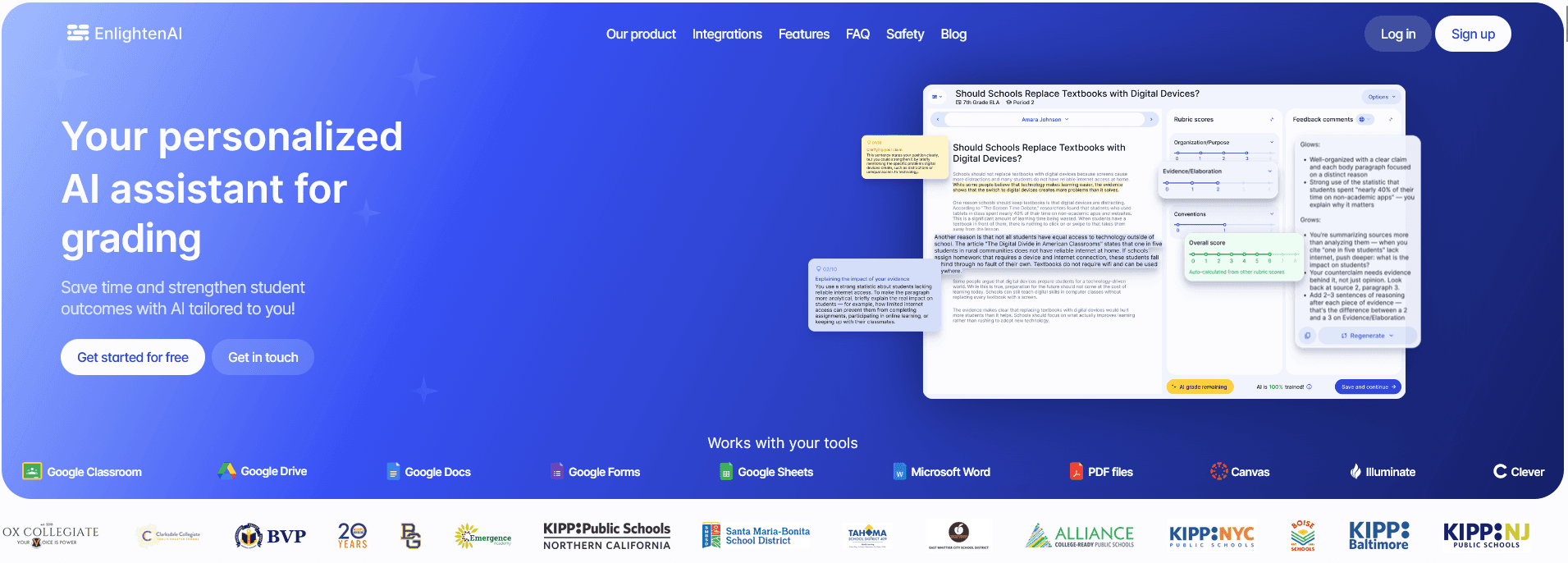
EnlightenAI is the top pick because it is the only tool on this list that calibrates to your rubric rather than applying a fixed template to every classroom that adopts it. The mechanism is specific: grade the first five submissions together with the TA and it learns how you score each criterion. From the sixth submission onward, it grades against your standard in your voice, returning per-criterion scores with inline comments the teacher reviews before releasing.
In a study with DREAM Charter Schools, EnlightenAI scored 0.77 QWK alongside a teacher vs. 0.52 for teacher-to-teacher agreement on the same work, meaning calibration to a specific teacher’s rubric can outperform a second human grader. In the New York Regents dataset, it matched the training teacher exactly 70% of the time, with the rest within one point on a 5-point scale. It covers grades 3-12, integrates with Google Classroom, Canvas, Clever, Illuminate, Google Drive, and Microsoft Word, and is iKeepSafe certified for FERPA, COPPA, and CSPC. Try it at rubric-based essay grading.
See how EnlightenAI measures grading accuracy for the full methodology, and how training your AI teaching assistant works before your first real class set.
Grades 3-12 with deepest coverage in ELA and humanities.
Permanent free plan, no monthly cap, no credit card required.
iKeepSafe certified for FERPA, COPPA, and CSPC. Student data never used to train models.
Best for: teachers who grade by rubric and need a TA that calibrates to their standard, not a generic feedback generator.
2. MagicSchool AI

MagicSchool AI is the broadest AI teacher toolbox in the US, and the grader sits inside a library of over 80 teacher tools alongside lesson planning, assessment generation, and the Raina AI chatbot. For teachers who already use MagicSchool for planning and want grading inside the same product, the integrated workflow is a genuine advantage. The grader accepts a custom rubric and produces criterion-referenced grades and draft feedback per student. The free tier caps grading runs; Plus at $8.33 per user per month (annual) removes the cap. Enterprise adds Clever, ClassLink, Canvas, and Schoology integrations, SSO, and a DPA. SOC 2, FERPA, COPPA, GDPR, and CCPA certified, with named district adoption including Denver, Atlanta, and Seattle.
Best for: US K-12 teachers who want AI grading inside a broader planning and feedback toolset under one login, with strong district-level compliance posture.
3. CoGrader
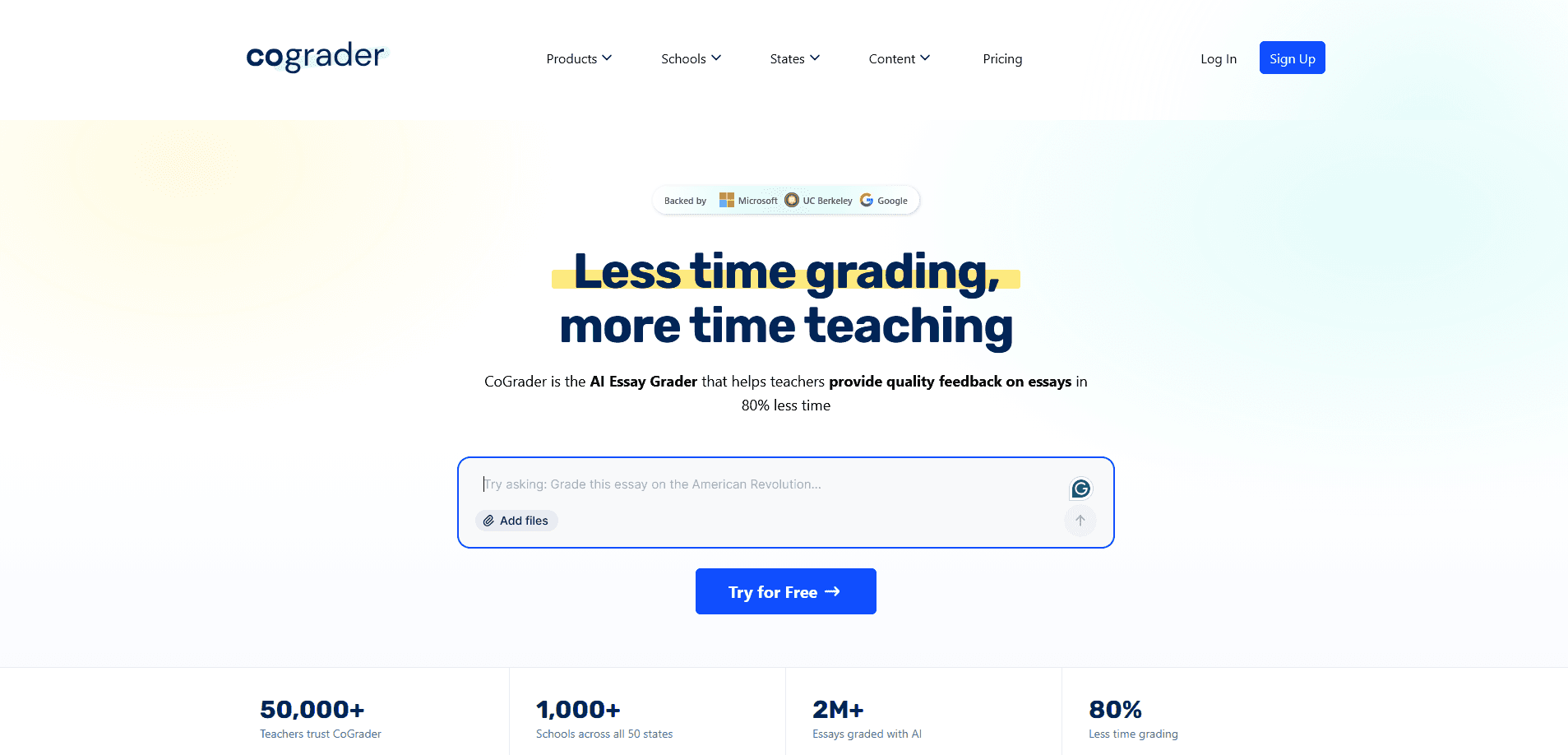
CoGrader is essay-specific by design, built around a rubric library organised by grade level with Google Classroom as its primary intake. It works cleanly when your rubric already maps to a standard in its library, but calibration to a custom rubric is limited. If your grading approach diverges from the template, the tool’s scoring will reflect the template rather than your judgment. Open-ended writing only, which is appropriate for its scope.
Best for: English teachers whose rubric maps to a common ELA standard and who already run class through Google Classroom.
4. EssayGrader AI
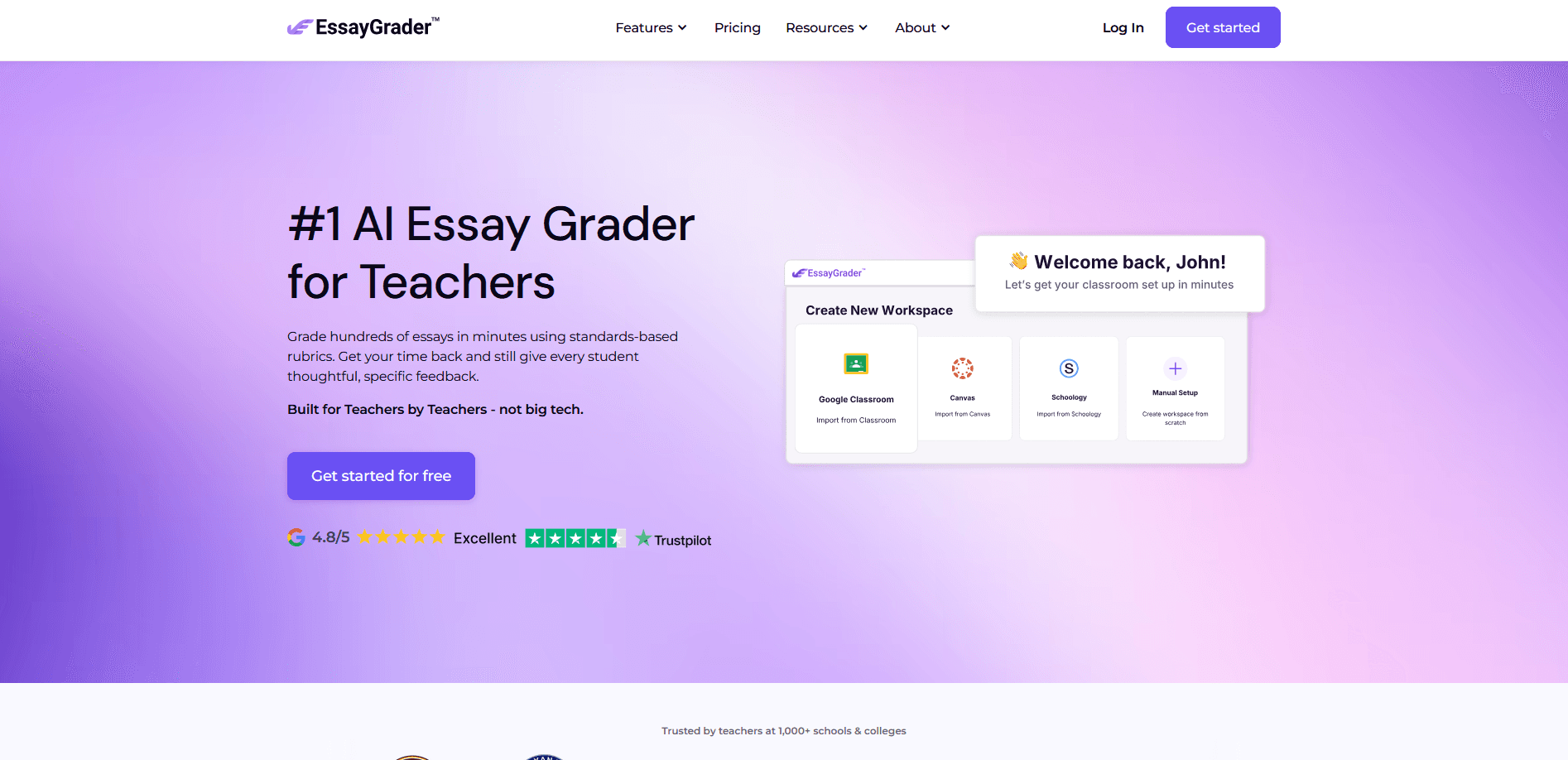
EssayGrader AI does one thing, which gives it more per-essay depth than multi-purpose platforms. Over 500 rubrics mapped to CCSS, AP, IB, STAAR, and Florida B.E.S.T. make it a strong pick when your essay rubric already matches an external standard. The 50-essay monthly free plan cap runs out before most class loads, so regular classroom use almost always requires a paid tier.
Best for: teachers whose essay rubric aligns with a specific state or exam standard and who want a single-purpose grading workflow built around that.
5. Brisk
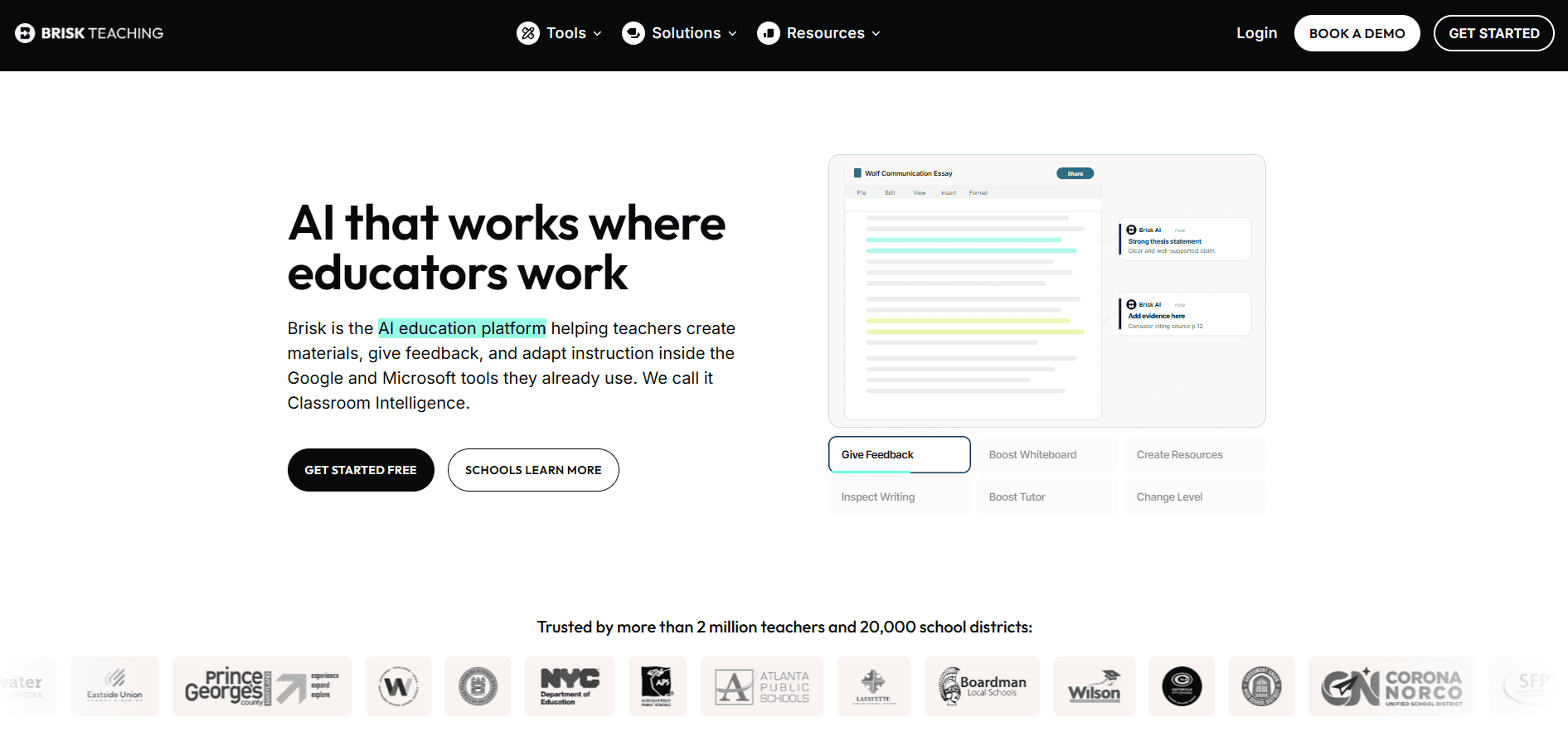
Brisk generates rubric-criteria comments on student work inside Google Docs via a Chrome extension. It does not assign a score, which means it is a feedback layer rather than a grading tool. That distinction matters more than most reviews acknowledge: a school adopting Brisk for grading is actually adopting a comment-generation aid and still needs a separate scoring process. For teachers who want fast rubric-framed comments while retaining full control over the grade, it is a low-friction add-on.
Best for: teachers who want AI-assisted rubric comments inside Google Docs and plan to assign the score themselves.
See how the top pick calibrates to your rubric: AI grading tool for teachers.
The ap lang frq grader should align to the expectations students face in AP English Language.
A reliable ai essay grader should make high-quality feedback easier to deliver consistently.
EnlightenAI helps teachers deliver instant, rubric-aligned AI writing feedback so students can practice, revise, and improve faster. It's a simple way to start grading essays more efficiently.
The feature list is not the answer. The answer is whether the output is usable without a full rewrite. A tool that generates plausible-sounding feedback against a generic writing standard still requires the teacher to read every submission before returning it. That shifts the grading workload rather than reducing it, and most teachers who try a tool and stop using it in six weeks ran into exactly this problem.
The single variable that determines usability is rubric fit: does the AI grade against your specific criteria, or does it apply a writing quality model and dress the output up as rubric feedback? Tools that fail this test create a hidden review step that cancels most of the time they save. Everything else, integrations, price, UI, is downstream of whether the rubric holds. Read how expert teachers build grading rubrics to understand what calibration to a real rubric requires.
The same principle holds even in rubric-based feedback in early grades, where vague criteria hurt calibration the most.