
Key takeaways
Writing practice with fast feedback is one of the highest-impact ELA prep strategies.
Students improve more when they revise based on rubric-aligned feedback.
Short, frequent writing sessions are more effective than occasional long essays.
AI feedback tools help teachers scale writing practice without increasing grading workload.
Revision cycles are where most writing growth happens.
Introduction
Test prep season is here, and if you're like most ELA teachers, you're staring down a familiar tension: your students need as many writing reps as possible before the state exam, but you only have so many hours to grade.
Here's the thing — the research on what actually moves the needle in ELA test prep isn't complicated. It's writing practice with feedback, at volume. Students get better at writing by writing a lot and getting meaningful, rubric-aligned feedback on every attempt. Not a score. Not a sticker. Specific, actionable feedback tied to the rubric they'll be assessed on.
The problem has never been the strategy. It's the math. If you teach 120 students and assign one practice essay, that's 120 essays to grade. Do that twice a week for six weeks of test prep and you're looking at 1,440 essays. It's a tall order to sustain that and still show up as your best self in the classroom. That's why more ELA teachers are turning to AI grading software during test prep season. It's also why more of them are comparing options for an automated essay grader built specifically for volume.

What Effective ELA Test Prep Writing Practice Looks Like
The most effective ELA test prep classrooms we’ve seen share a few patterns:
2-3 short writing reps per week, not one big essay every Friday. Think: a single paragraph responding to a text-dependent prompt, scored against one or two rubric dimensions at a time.
Feedback within 24 hours. When students get feedback 48 hours later, the context is gone. They’ve moved on. Feedback that lands while the prompt is still fresh changes behavior.
Targeted revision cycles. Students don’t just read feedback — they rewrite. The loop is: write → get feedback → revise → submit again. That revision loop is where the learning actually happens.
Rubric-aligned scoring every time. Students internalize the rubric by seeing it applied to their writing repeatedly — not by reading it off a poster on the wall.
That’s the core promise of ai for grading consistency — the same rubric applied the same way, rep after rep, so students can trust what the feedback is actually telling them.
This isn’t a new idea. Teachers have known for years that high-frequency practice with feedback is the best way to prepare students for state writing assessments. The bottleneck has always been grading capacity. That’s the gap essay grading AI is built to close.
Students also benefit from practicing topic sentence starters before responding to timed prompts.
How AI Writing Feedback Makes High-Volume Test Prep Sustainable
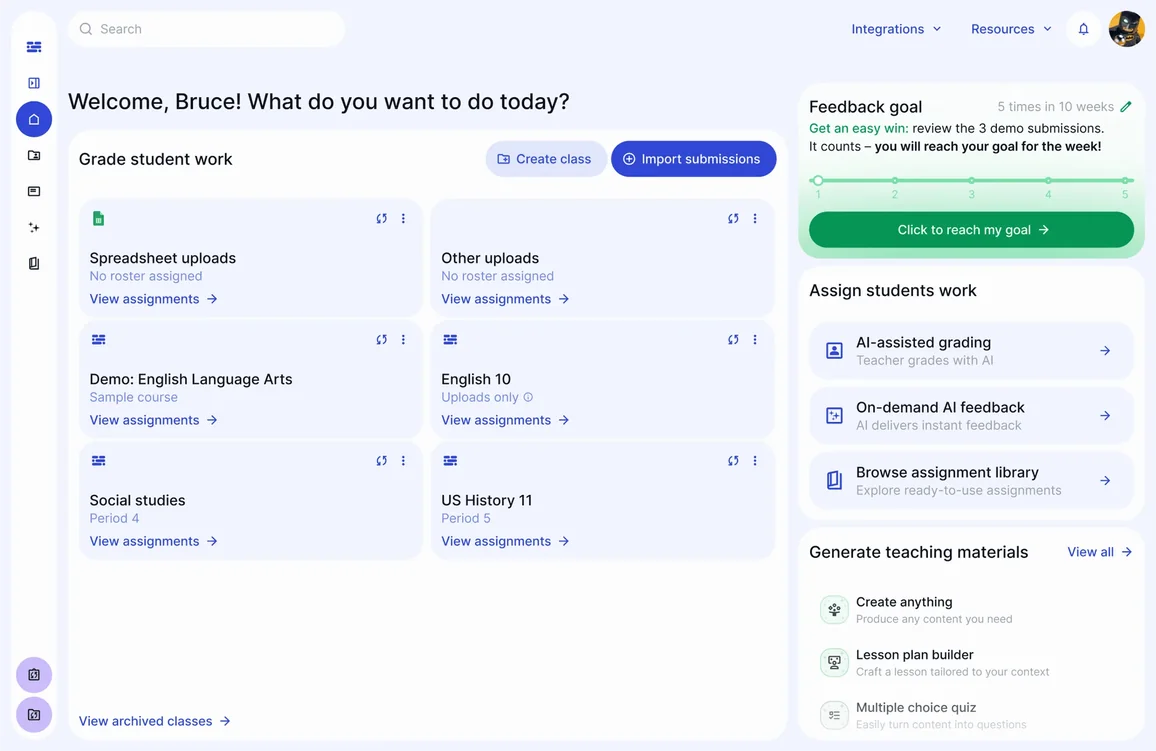
This is exactly the problem EnlightenAI’s AI writing grader was built to solve. Here’s how teachers are using it during ELA test prep season:
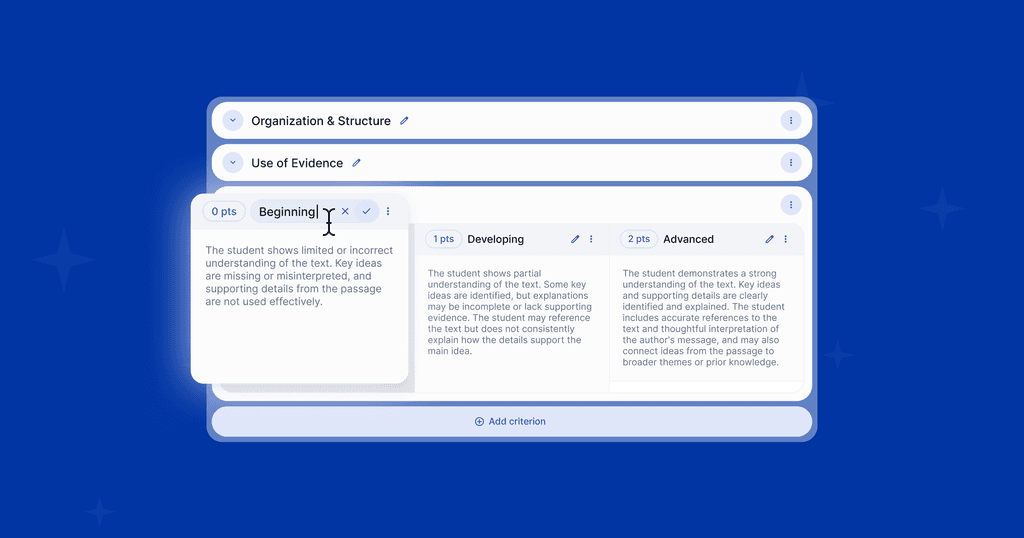
Assign short, frequent prompts tied to your state rubric. You can set up an assignment in under two minutes using your own rubric or a state-aligned one. Students write and submit directly in the platform.
Students get instant, rubric-aligned feedback. The moment a student submits, the AI grading assistant returns scores and actionable feedback mapped to each rubric dimension. No waiting. No stack of papers on your desk.
That instant response is exactly what an ai feedback generator is built to deliver at this volume — rubric-mapped comments the moment a student submits, not a stack waiting for Friday.
Use the data to target your instruction. Instead of spending your prep period grading, spend it looking at class-wide trends. Which rubric dimension is the weakest across your class? That’s tomorrow’s mini-lesson, generated in a single click in EnlightenAI. That single click is essentially a free lesson plan generator, built straight from your own class’s weak spots.
Let students revise and resubmit. Turn on resubmission so students can act on their feedback immediately. The write-feedback-revise loop is where growth happens — and EnlightenAI makes it possible to run that loop multiple times per week without burning out.
High-quality preparation benefits from varied types of formative assessments that inform the next practice cycle.
A reliable essay grading ai can make high-volume practice easier to sustain.
Effective practice at volume calls for ai grading software that returns usable feedback quickly.
A standards-aligned essay rubric helps students understand what strong responses require before test day.
A dependable ai writing feedback tool can make practice cycles more useful for both teachers and students.
An ai grading assistant can keep feedback cycles moving during high-volume test practice.
Focused ap lang frq grader gives students repeated opportunities to practice with meaningful feedback.
An ai essay grader can keep high-volume practice feedback timely and actionable.
The Bottom Line for ELA Test Prep
Test prep doesn't have to mean soul-crushing packets and practice tests that pile up on your desk. The highest-leverage ELA test prep strategy is to dramatically increase the volume of writing practice your students get — and make sure every rep comes with real, rubric-aligned feedback.
Your students don't need more test prep worksheets. They need more practice with feedback. Give them the reps. And if you're comparing the best AI grading tools for your classroom, our roundup can help you choose.
High-volume STAAR practice only works when it comes with feedback
Texas ELA teachers know the pressure: STAAR writing demands practice volume that most classroom schedules can barely accommodate. The missing piece isn't more prompts, it's the feedback that tells students what to change between drafts. Practice without feedback builds confidence. Practice with feedback builds writers.
Give every practice draft a rubric-specific STAAR score, try the STAAR writing grader.
California writing practice that comes with California rubric feedback
Generic essay feedback doesn't prepare California students for CAASPP, state-specific rubric alignment does. Grading practice essays against the actual CAASPP criteria gives students feedback that maps directly onto what they'll face on test day. CAASPP preparation that uses the real rubric is the only kind that translates to the actual exam.
Grade practice essays against the CAASPP rubric, try the CAASPP writing grader.
The strategy that makes writing practice worth doing
Volume alone doesn't improve writing. Volume plus specific, rubric-aligned feedback does. The practical barrier, the reason most teachers can't assign more frequent writing, isn't motivation, it's marking capacity. When feedback happens at scale and arrives in minutes, the limiting factor changes. The highest-leverage test prep move is more writing practice with faster, better feedback.
Remove the marking bottleneck from your test prep, try the AI essay grader. Look for an ai essay grader free enough to run at this volume every single week.
FAQ
High-frequency writing practice paired with immediate, rubric-aligned feedback helps students improve faster than passive test prep methods alone.
Short writing sessions several times per week are typically more effective than occasional long-form practice essays.
Feedback helps students identify weaknesses, revise effectively, and strengthen organization, clarity, and evidence usage over time.
AI tools can help teachers provide faster rubric-aligned feedback, reduce grading workload, and increase opportunities for student revision.
Students should focus on writing clarity, organization, textual evidence, revision habits, and understanding rubric expectations.