
Key takeaways
AI grading software spans two very different jobs, auto-grading objective answers and generating feedback on open-ended writing. Know which one you're evaluating.
Custom rubrics, not raw speed, separate real grading software from a generic feedback generator. Several tools on this list skip rubric-building entirely.
LMS integration and privacy compliance (FERPA, COPPA) vary widely across these eight tools. Confirm both by name before you commit.
Grading and plagiarism/AI-detection are different jobs, even when a vendor bundles both in one product.
Best for: anyone comparing AI grading software before a purchase, not just skimming feature lists.
"AI grading software" covers two very different jobs: auto grading objective questions with one correct answer, and reading open-ended writing to apply judgment against a rubric. The eight tools below span both ends of that range, and we say plainly which end each one actually sits on, not just what its marketing claims.
Evaluate each option by four things: does it hold your custom rubrics or a fixed template, does it integrate with your actual learning management system, what's its privacy posture, and does it scale to a full department. Everything else is downstream of those four. For the deeper dive specifically on essay grading, see 6 best essay grading AI tools compared, or for the wider set of ai tools for teachers beyond grading, see best AI tools for education.
This guide reviews seven tools and how they compare on rubric fit, LMS integration, privacy, and scale:
EnlightenAI
Gradescope
CoGrader
EssayGrader.ai
MagicSchool AI
Turnitin
GPTZero
1. EnlightenAI
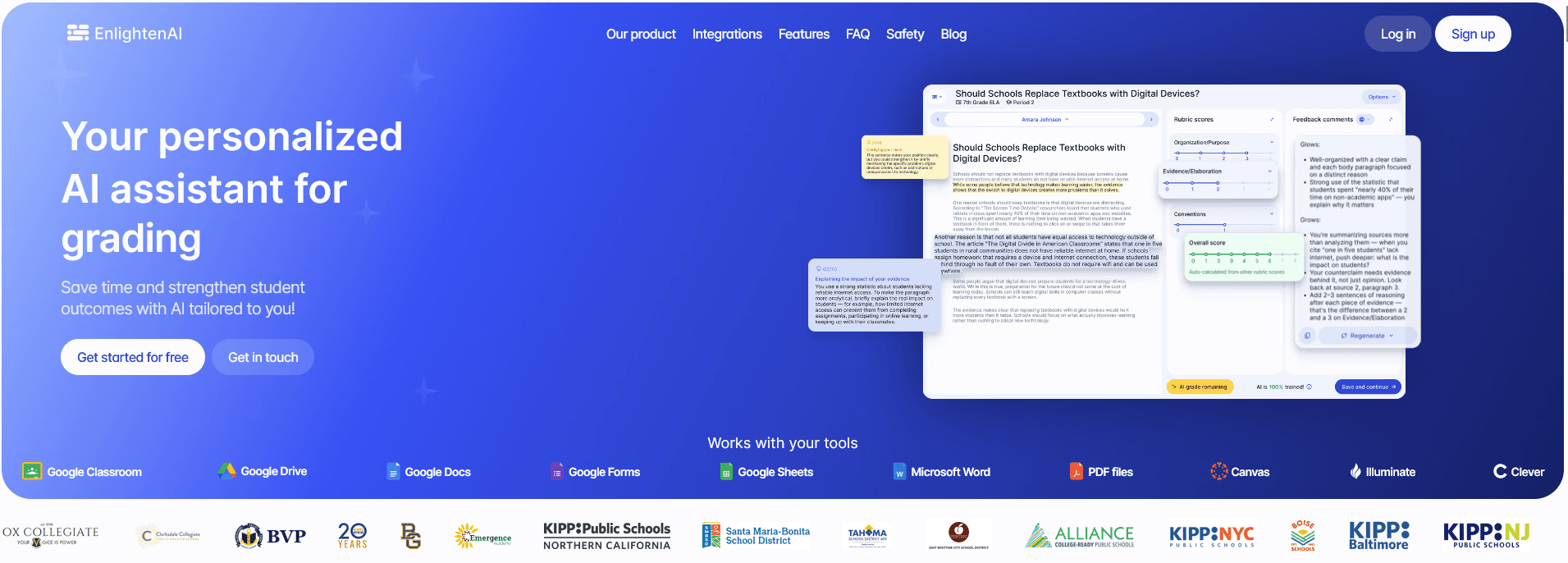
EnlightenAI is a TA trained on your specific rubric from the first five submissions you grade together, so it scores the rest of the class against your actual standard instead of a fixed template. That calibration step is what most software on this list skips, which is why generic AI feedback tends to sound reasonable in isolation but drift from what your rubric actually rewards.
Best for: teachers and departments who need rubric-consistent grading across a full class set, not just a faster first pass. Covers grades 3-12, integrates with Google Classroom and Canvas, and is built for FERPA and COPPA compliance from the ground up. See how the calibration works in pretraining your AI teaching assistant.
2. Gradescope
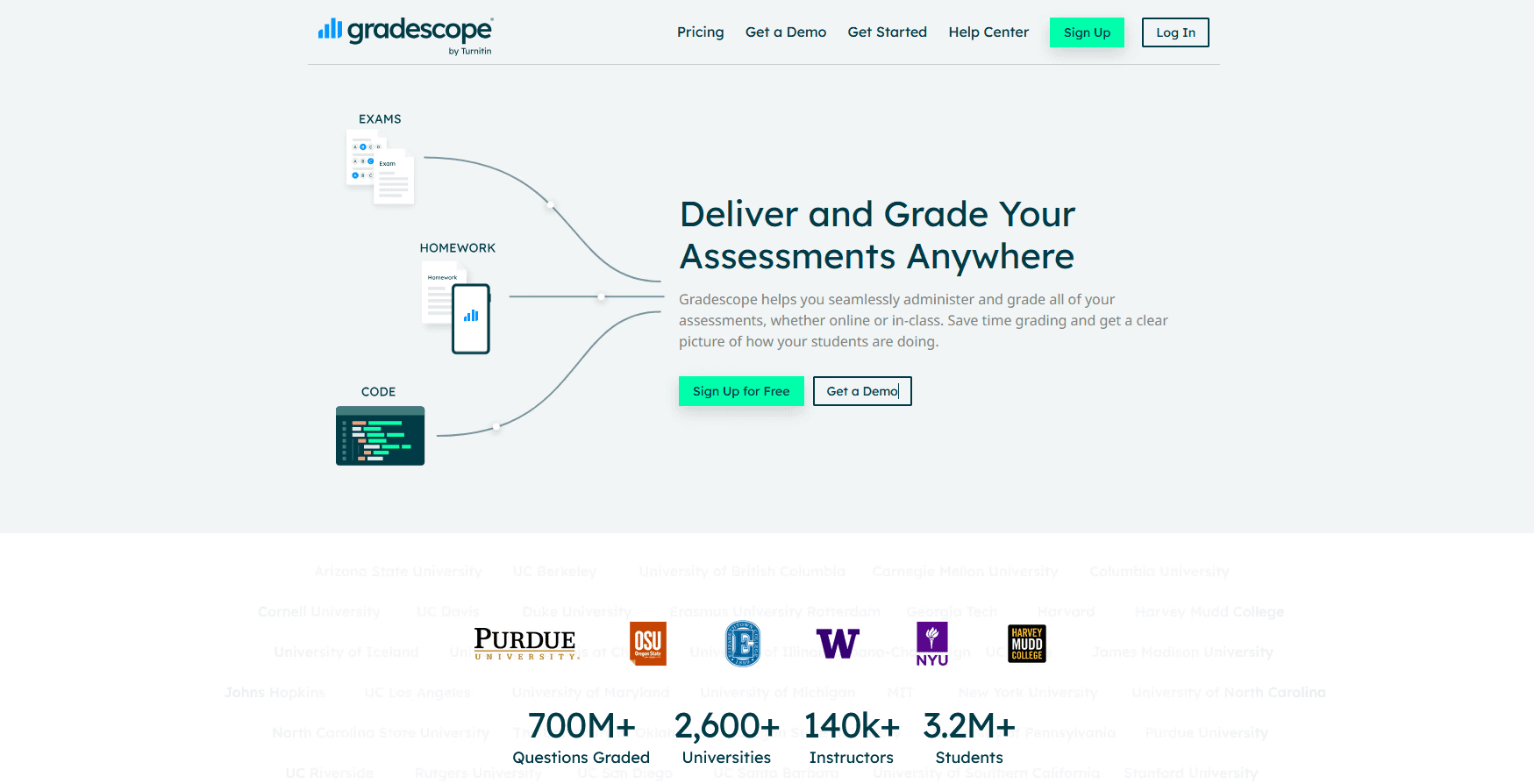
Gradescope's standout feature has nothing to do with AI speed: retroactive rubric updates. Change a rubric mid-batch and it propagates back across every already-graded submission automatically, and AI answer-grouping batch-grades similar responses in one action. The catch is rubric-building itself isn't a strength here, you bring a finished rubric, Gradescope doesn't help you write one.
Best for: departments where multiple assessors grade the same assignment and need to stay consistent with each other, especially for structured essays and STEM problem sets.
3. CoGrader
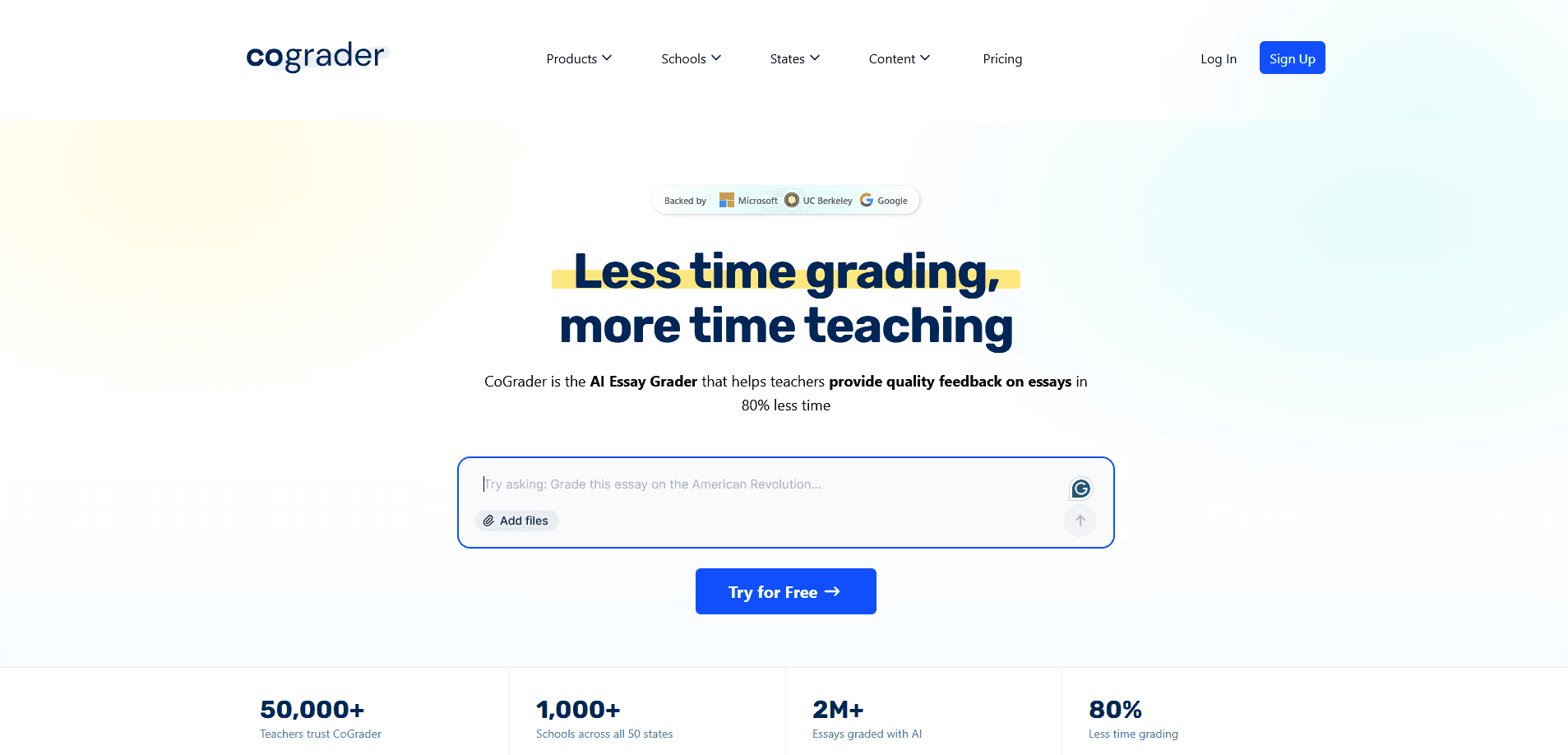
CoGrader is a K-12 essay-grading specialist with a defining feature: score rationale before release, you see exactly why the AI scored each criterion the way it did before a grade reaches a student. The design assumptions are K-12 ELA throughout, so it degrades on domain-specific content outside that frame.
Best for: K-12 English and ELA teachers grading essays against CCSS, TEKS, or AP standards who want to review the AI's reasoning, not just its score.
4. EssayGrader.ai
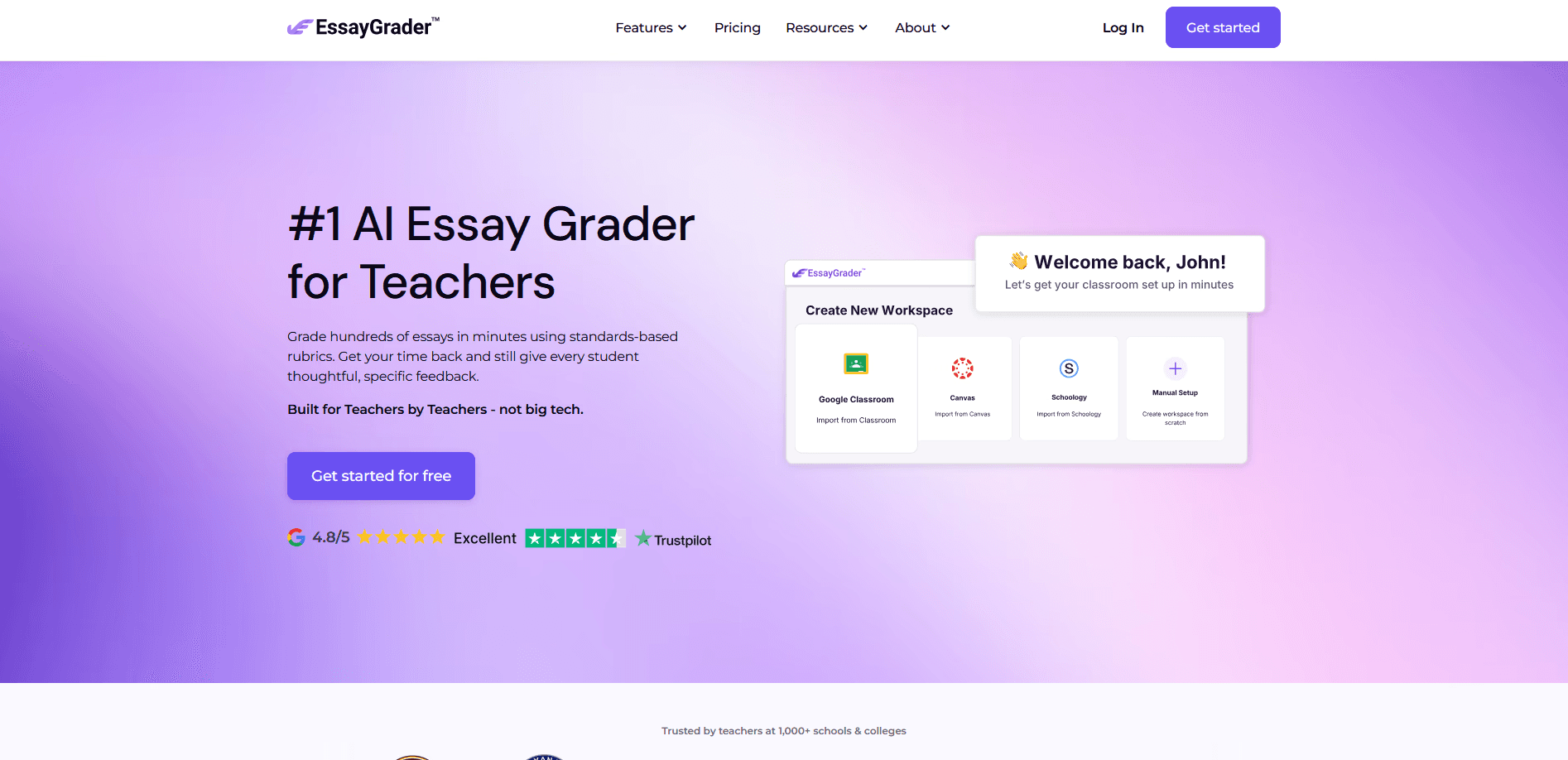
EssayGrader.ai pairs clear pricing with the widest standards coverage of any specialist grader here, CCSS, AP, IB, Texas STAAR, and Florida B.E.S.T. among them. It grades against rubrics you bring, it doesn't generate them, and the real grading depth (coherence, argument structure) starts at the paid tier, not the free one.
Best for: teachers who already have a rubric and want broad standards coverage without a school-wide rollout.
5. MagicSchool AI

MagicSchool AI is the tool to reach for before a dedicated grader if you haven't built your rubric yet, its Rubric Generator creates one, then Class Writing Feedback drafts comments against it for you to personalize before release. The knowledge base has a 2021 cutoff, which is worth checking against any framework updated since.
Best for: teachers who need to build a rubric from scratch and grade against it in the same place.
6. Turnitin
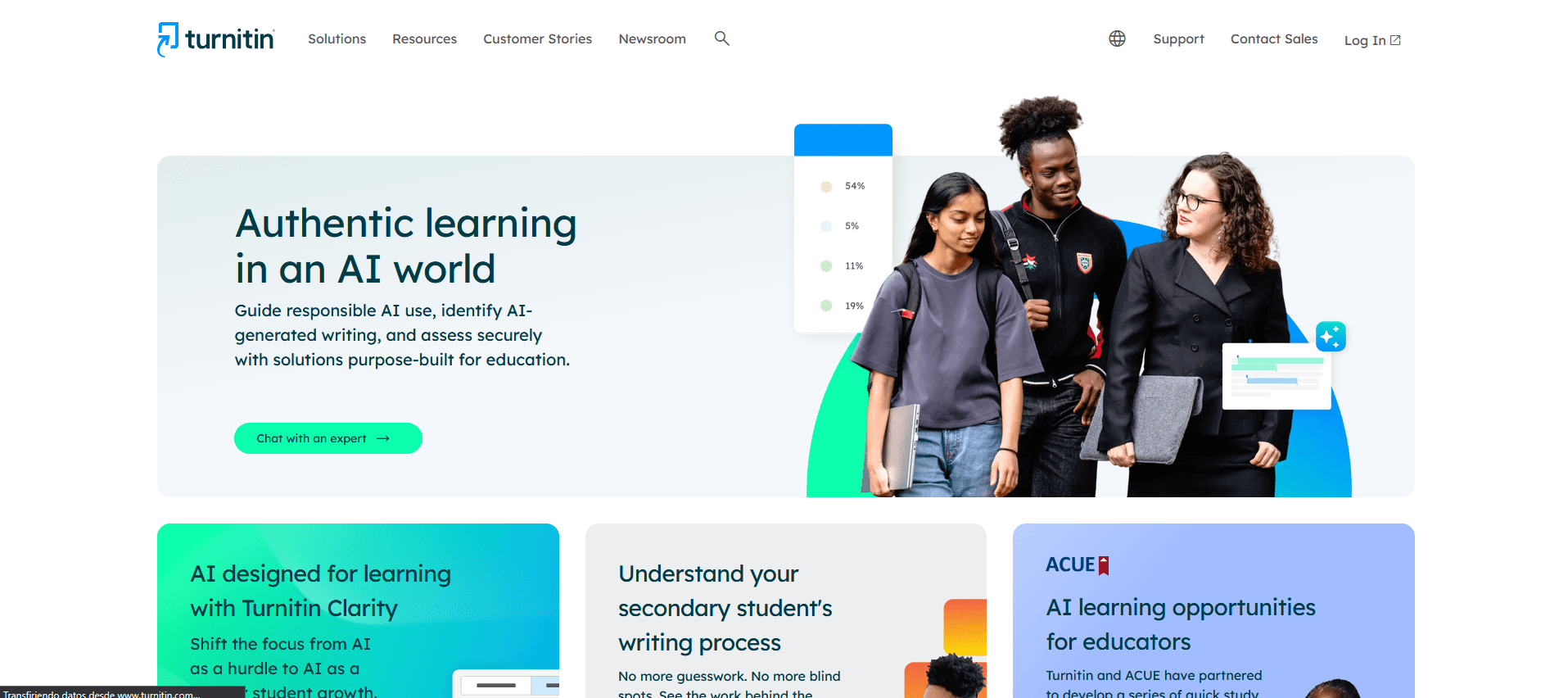
Turnitin isn't a standalone grader, its plagiarism and AI-writing detection sit in the same submission pipeline as grading feedback, useful where academic integrity is part of marking rather than a separate step. It's sold institutionally through LMS contracts, so without IT support and an integration pathway already in place, it's a heavier lift than a specialist grader.
Best for: schools where plagiarism detection and grading need to happen in one workflow, and where IT and LMS support already exist.
7. GPTZero
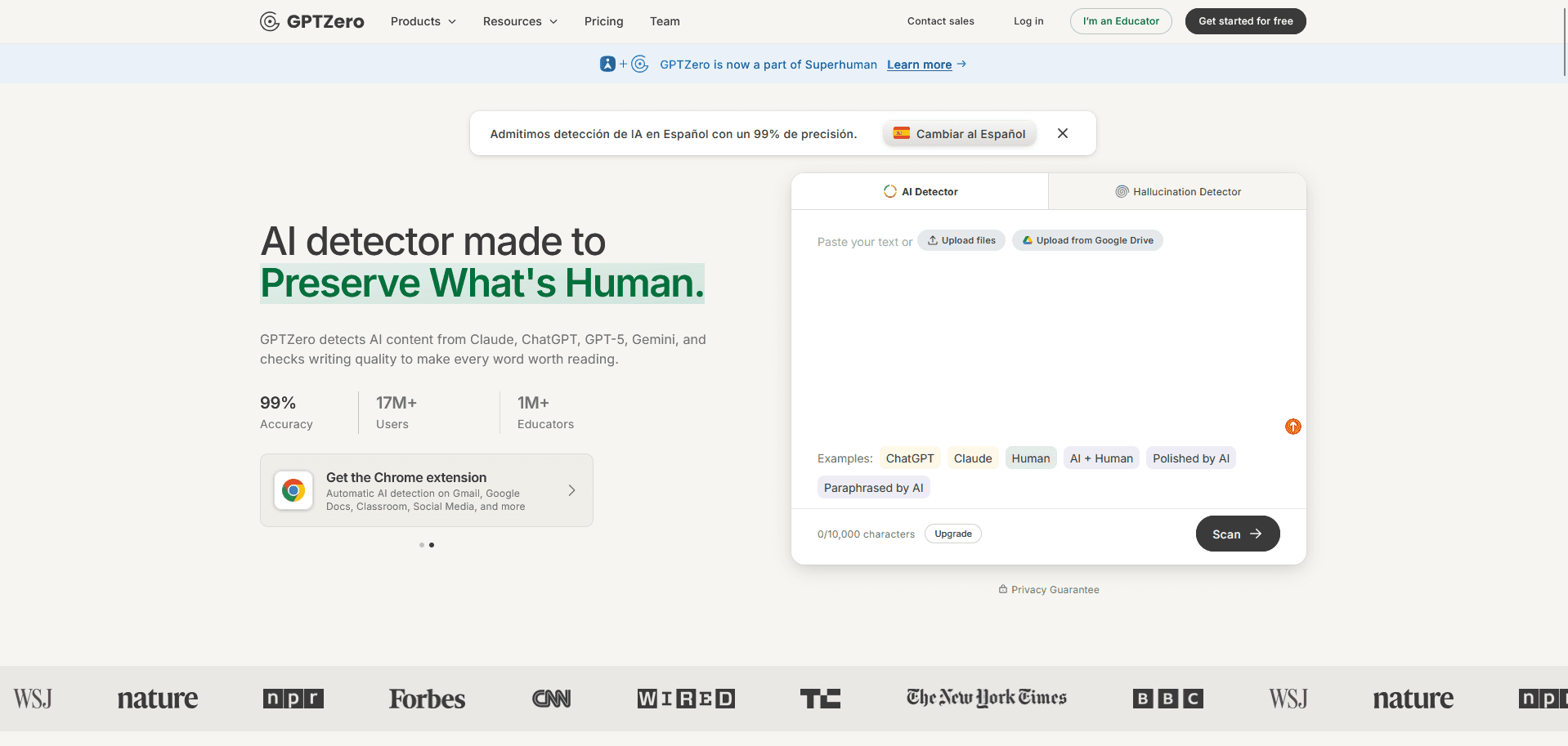
GPTZero leads with AI-detection-first grading, checking submissions for AI-generated content and plagiarism by default before applying a rubric, and it makes you hand-grade a few submissions first so it can calibrate to your scoring style. Its accuracy claims are self-reported, not independently verified, worth treating with the same scrutiny you'd apply to any vendor's own numbers.
Best for: individual teachers who want AI-detection built into the grading step itself, without institutional procurement.
EnlightenAI helps teachers deliver instant, rubric-aligned AI writing feedback so students can practice, revise, and improve faster. It's a simple way to start grading essays more efficiently.
Auto grading handles multiple choice, fill-in-the-blank, and other questions with one right answer, which is why Gradescope and Google Forms-style tools grade those instantly with no judgment involved. An AI essay grader has to interpret an argument and weigh it against a rubric instead, which is a harder, slower job, and it's why CoGrader, EssayGrader.ai, and EnlightenAI all exist as a separate category from a general assessment platform that only auto-grades objective work.
The fundamentals behind that judgment call are the same ones covered in how to grade a paper, whatever software ends up handling the first pass.
Most tools on this list integrate with Google Classroom, and several extend to Canvas, Schoology, or Moodle, though the depth of that integration varies from a full two-way sync to a simple export. Confirm the specific learning management systems a tool supports by name before you buy, since a vendor's general "LMS integration" claim on a pricing page can mean very different amounts of manual work once you're actually using it.
If rubric consistency across a full class set is the criterion that matters most in this comparison, that's exactly what a rubric-trained grading tool is built around, and what holding up at scale across a department actually requires.
Before comparing tools, it helps to have your own rubric in shape — see how to make a rubric specific enough for any of these to score against consistently.
Most AI grading software on this list asks you to trust a generic standard applied at scale, or hands you a rubric-builder and stops there. EnlightenAI is trained on your rubric from the first five submissions you grade together, then holds that exact standard for the rest of the class. Build your rubric first if you don't have one yet.
Start with the assignments already on your desk. Get started for free.