Most "best AI tools for teachers" lists compare features. This one looks at the companies behind them, who built them, how they're funded or run, and what that says about where each one is headed.
That matters because a two-year-old startup on its third funding round behaves differently than a 25-year-old company or a nonprofit. It affects pricing, roadmap, and how long a tool is likely to stick around. This list covers six companies building for K-12 classrooms today, including where a rubric-trained essay grader fits next to platforms built for lesson planning.
Education AI for teachers spans company types and product categories, from generative AI assistants for students to a full AI platform for teachers. Venture-backed startups move fast and iterate constantly, but their roadmap answers to investors as much as to teachers. Nonprofits like Khan Academy answer to a mission instead of a cap table, which shapes what they charge and what they build first. Long-running companies like Turnitin bring institutional trust and scale, but change more slowly.
None of these structures is automatically better. A startup's speed can mean a feature ships before it's fully tested. A nonprofit's mission can mean slower feature velocity. Knowing which kind of company built a tool tells you what to expect from it a year from now, not just today.
It's also worth asking who the company is actually building for. A platform designed to sell district-wide tends to prioritize admin dashboards and compliance reporting, while a tool aimed at individual teachers usually prioritizes speed and ease of setup instead. Both are valid, but they lead to different products.
Companies covered in this guide
This guide profiles six companies building AI tools for K-12 teachers, by what they build, how they're funded or run, and where each one fits in a classroom:
1. EnlightenAI
2. MagicSchool
3. Brisk Teaching
4. Khan Academy (Khanmigo)
5. Turnitin
6. Google for Education
1. EnlightenAI
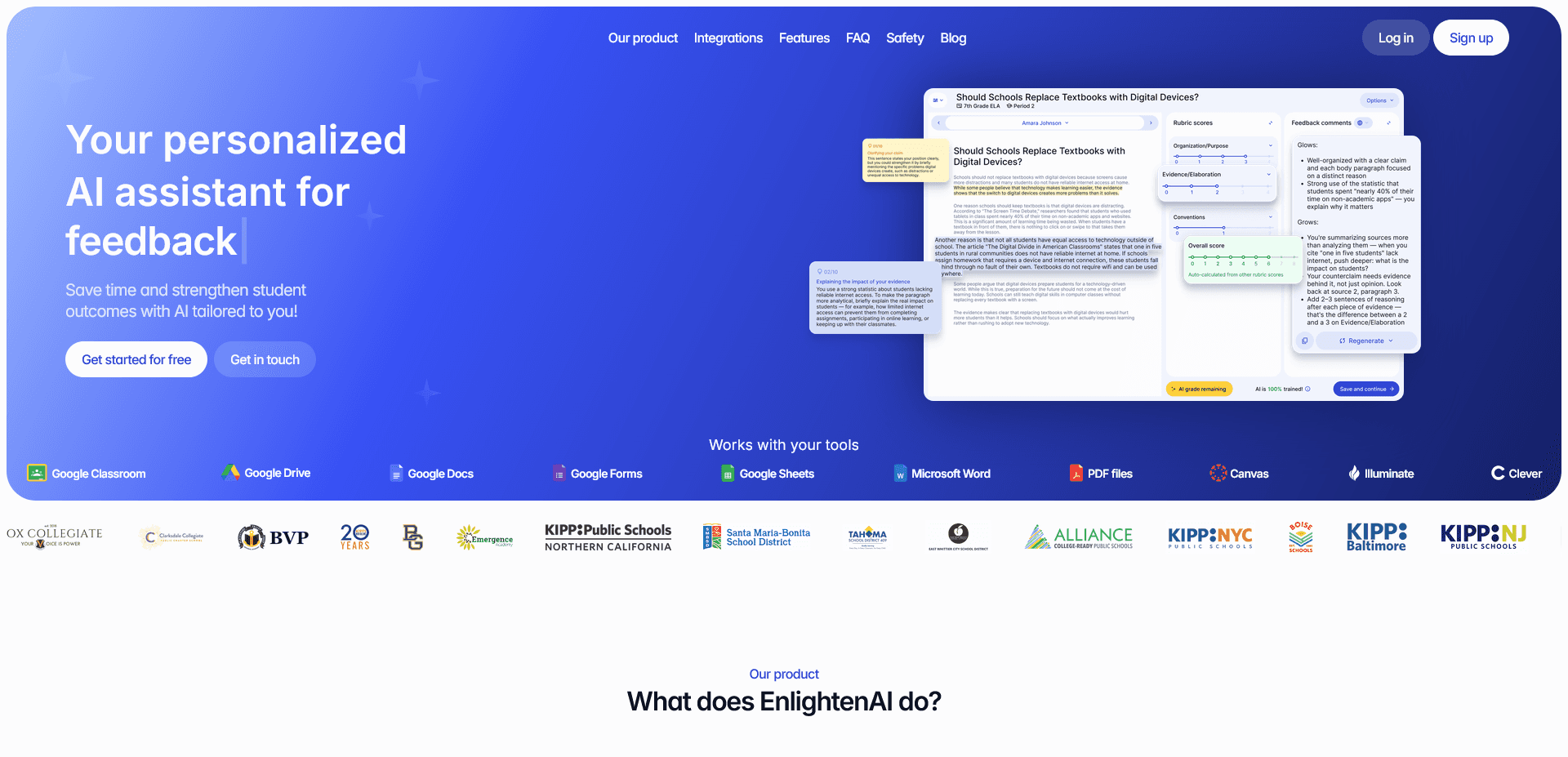
EnlightenAI is a smaller, purpose-built company. It doesn't try to cover lesson planning, presentations, or classroom management, it's built for one job: rubric-aligned writing scoring and feedback, grades 3-12.
Teachers train the TA on the first five submissions using an ai rubric generator or their own criteria, walked through here, and it grades the rest in the teacher's voice, not a generic one. In a study with DREAM Charter Schools, EnlightenAI plus a teacher scored higher agreement with human graders than teacher plus teacher.
On data handling, EnlightenAI is iKeepSafe certified for FERPA, COPPA, and CSPC and doesn't train its models on student work. As a smaller company, that certification is public rather than something a district has to take on faith during a sales call.
Where they fit: schools and teachers who need an essay grader for teachers, not a general classroom platform.
2. MagicSchool
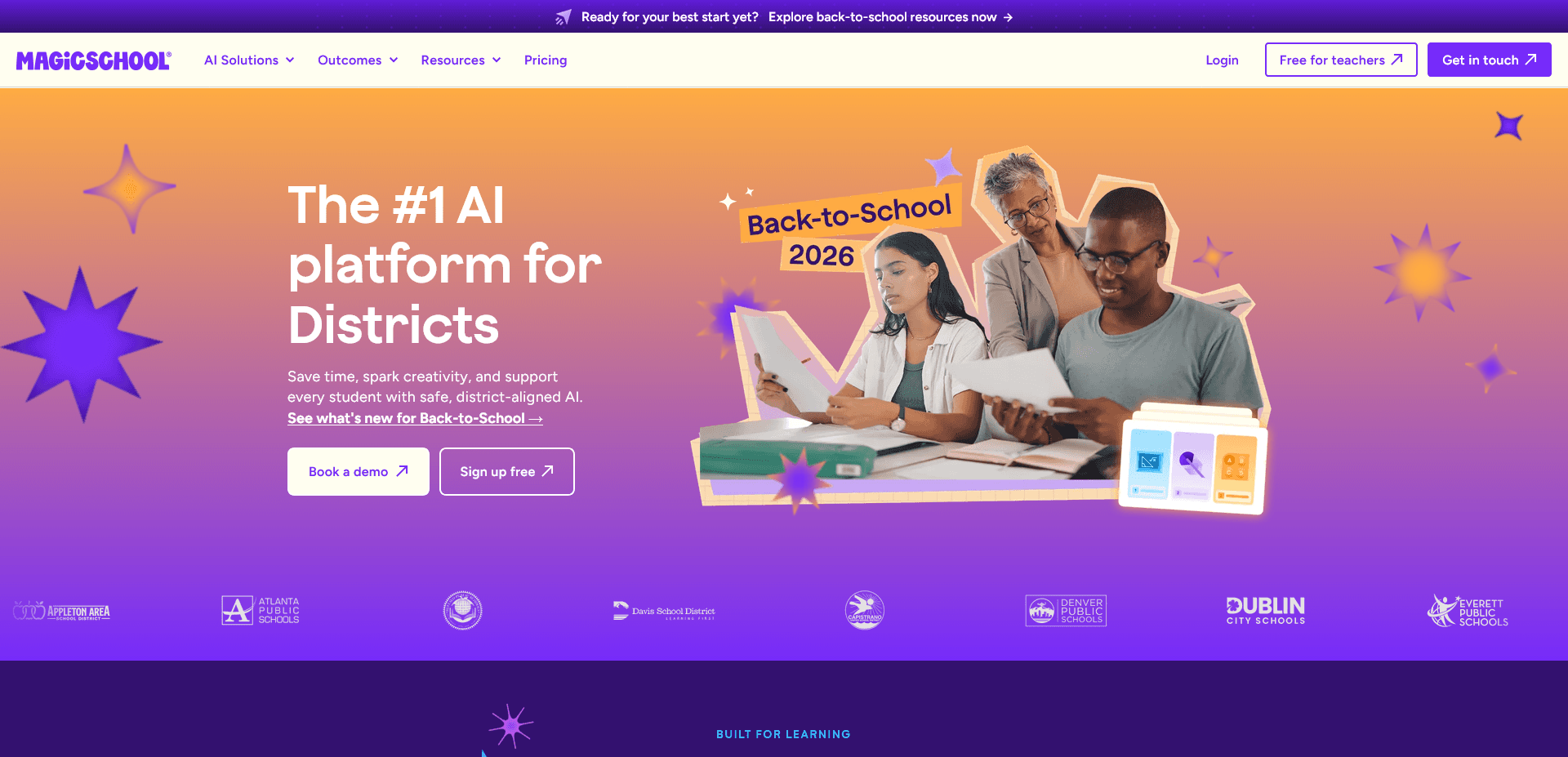
MagicSchool is a venture-backed startup founded by Adeel Khan, a former teacher, and has grown into one of the most widely adopted AI platforms in U.S. K-12, reporting over 5 million educator sign-ups and deployment across more than 13,000 schools. It raised a $45 million Series B in early 2025 led by Valor Equity Partners.
The MagicSchool AI product covers lesson plans, quiz generators, Google Slides, IEP drafts, resource creation, and rubric starting points, with a district-facing Enterprise tier that adds usage analytics and policy controls.
MagicSchool has also started publishing district case studies naming specific partner districts and adoption data, a level of transparency startups this size don't always offer.
Where they fit: districts and schools that want one broad AI platform with admin-level oversight built in, not a single-purpose tool.
3. Brisk Teaching
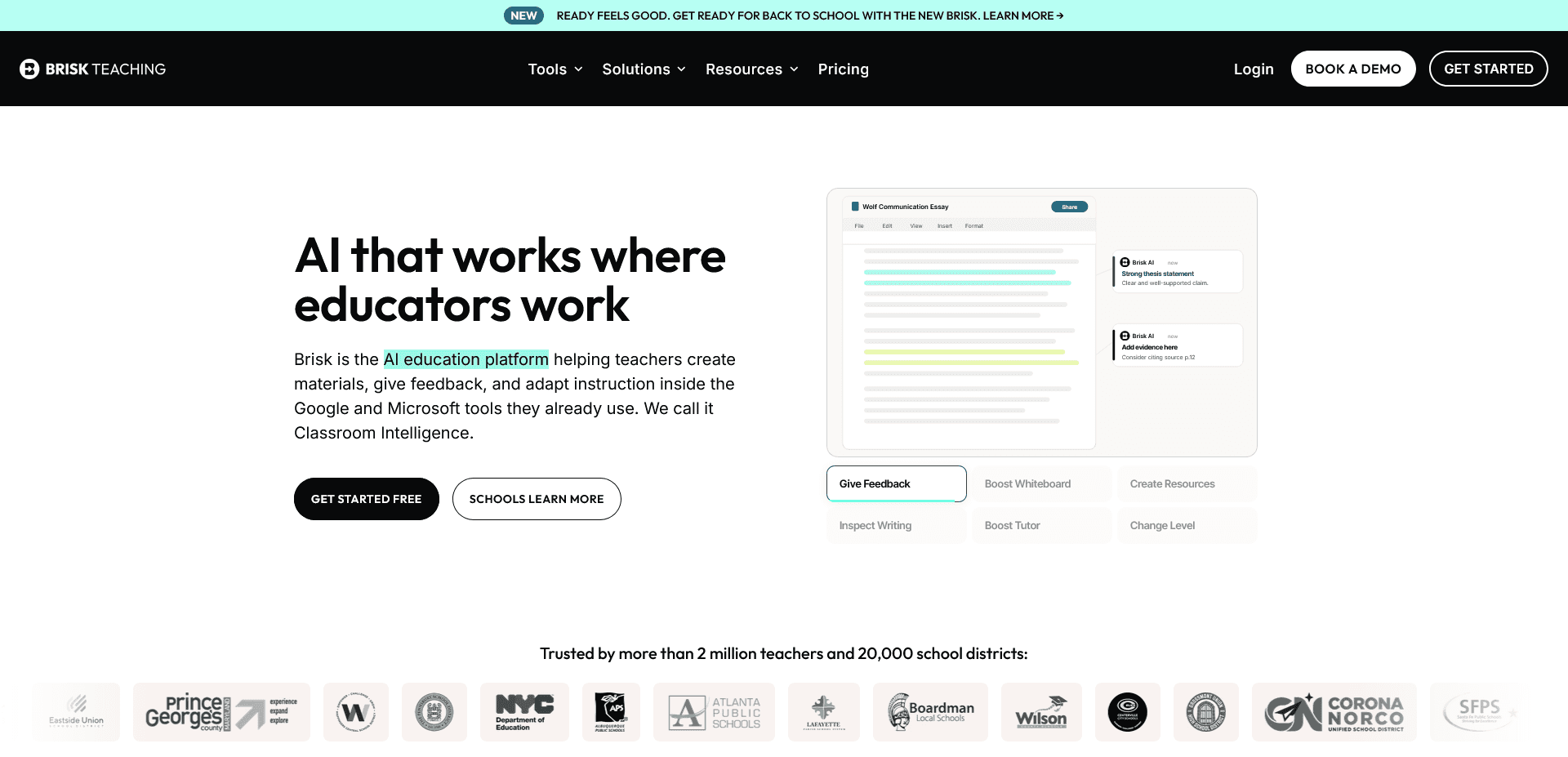
Brisk Teaching is a younger, venture-backed startup, founded in 2023 by Arman Jaffer, a former Chan Zuckerberg Initiative engineer. It's raised close to $22 million across a seed and Series A round led by Bessemer Venture Partners, and reports use by more than a million educators.
The product is a Chrome extension rather than a standalone platform, layering AI tools into Google Docs, Google Forms, Google Workspace, and Classroom so teachers aren't switching tabs to draft a quiz or feedback comments.
Where they fit: teachers who live in Google Workspace and want AI features built into tools they already use daily.
4. Khan Academy (Khanmigo)
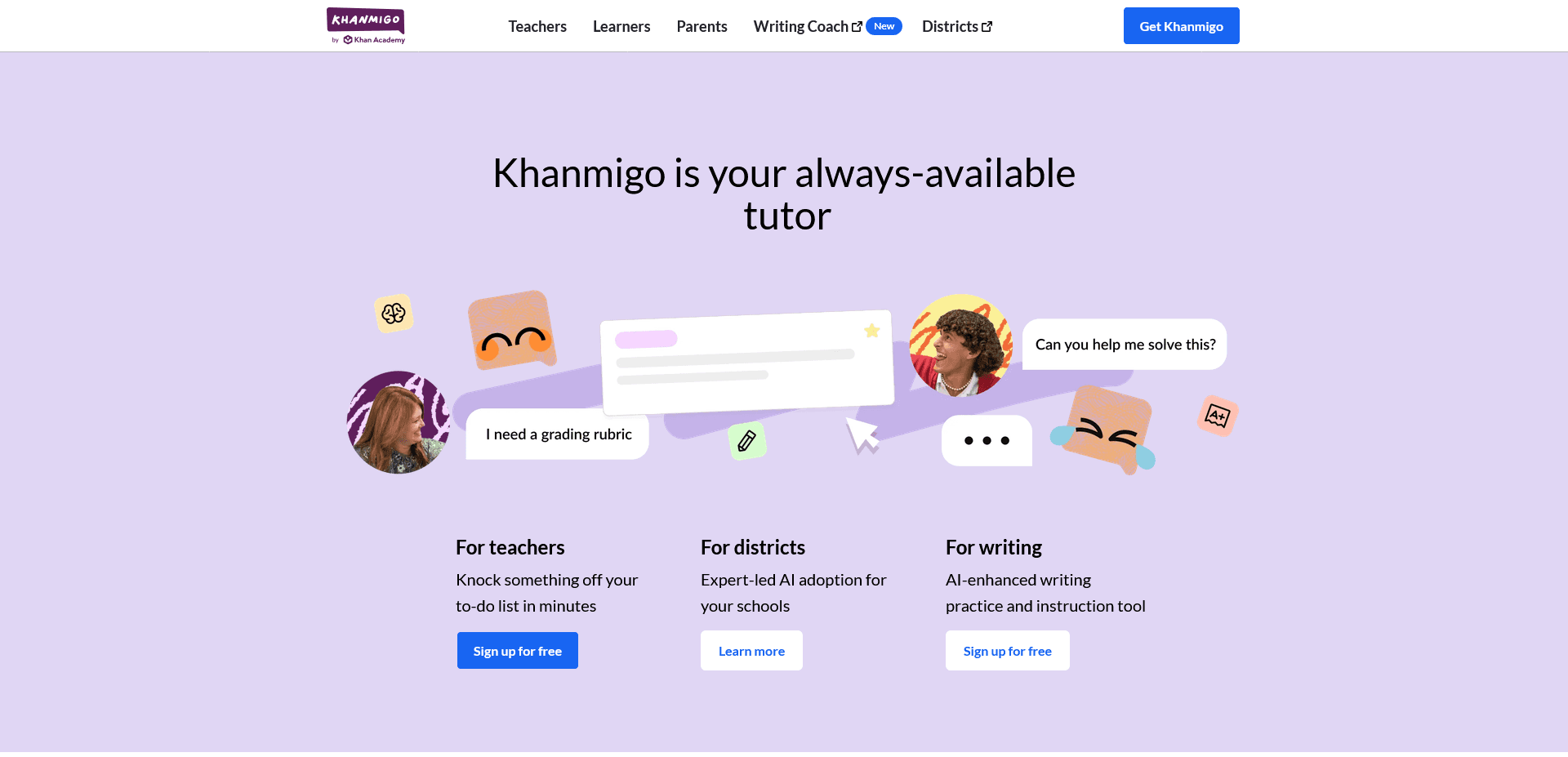
Khan Academy is the outlier on this list structurally: a nonprofit whose Khanmigo AI assistant supports instruction and formative assessment, not a startup chasing a funding round. Khanmigo, its AI teaching assistant, is free for individual U.S. teachers, with Microsoft underwriting part of that access.
Because it's built on Khan Academy's own curriculum, Khanmigo fits most naturally alongside math and core-subject planning. Student access runs only through school or district partnerships, not individual signup, which is a meaningfully different model than the venture-backed tools on this list.
Where they fit: teachers already using Khan Academy content, or districts weighing a nonprofit's roadmap against a startup's.
5. Turnitin

Turnitin is the incumbent here, founded in 1998 and now serving more than 16,000 institutions in 185 countries. It built its name on plagiarism detection before expanding into AI writing detection and, through its 2018 acquisition of Gradescope, AI-assisted grading.
That history means Turnitin is best known in higher ed, but its integrity and grading tools are increasingly used in secondary schools too, especially as districts adopt formal AI policies.
Where they fit: schools that need academic integrity checking alongside grading, not a grading-only tool.
6. Google for Education
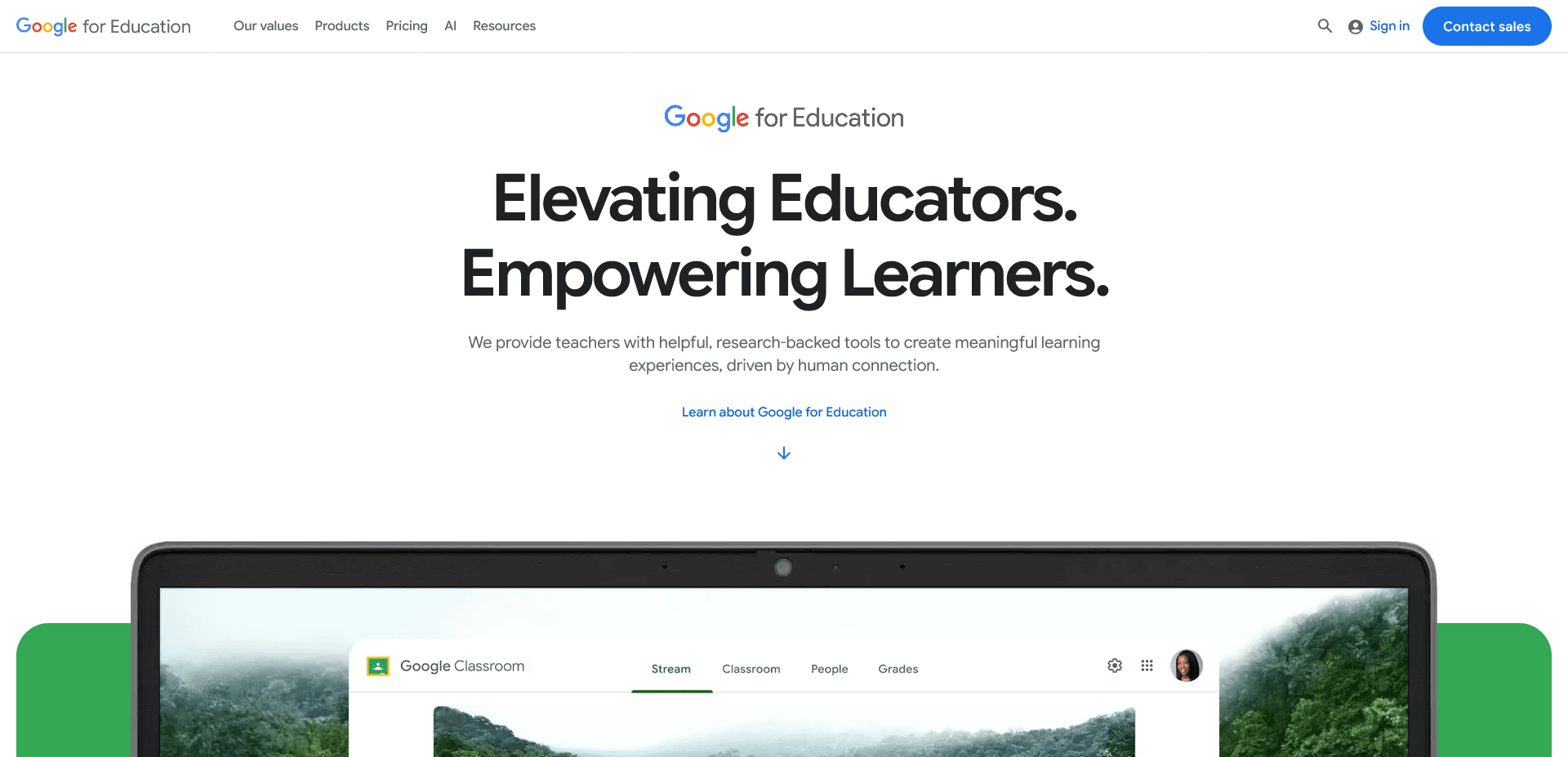
Google is the largest company on this list by a wide margin, and its AI in education strategy spans Gemini, NotebookLM, Google Classroom, and other Workspace tools. Rather than building a separate platform, it embedded Gemini directly into Google Classroom and Workspace tools that a reported 170 million educators and students already use.
Gemini for Education is included free with Workspace for Education Fundamentals, covering lesson plans, differentiated materials, and, more recently, assignment drafting and progress summaries inside Classroom itself.
Where they fit: schools already standardized on Google Workspace that want AI without adding a new login.
Company structure aside, the tools that actually save time share one thing: they're built around a specific classroom job, not AI in general. If that job is grading against a rubric, see how a purpose-built essay grader compares to a general platform. For a feature-by-feature comparison instead of a company-by-company one, see free ai tools for teachers.
Big platforms and nonprofits both have a place in a teacher's toolkit, but neither was built specifically for rubric-aligned writing feedback. A general AI platform can draft a lesson plan in seconds and still take an hour to grade a stack of essays well. EnlightenAI trains on your rubric and your voice, so grading gets faster without losing the parts only you can judge.
Start with the assignments already on your desk. Get started for free.
EnlightenAI helps teachers deliver instant, rubric-aligned AI writing feedback so students can practice, revise, and improve faster. It's a simple way to start grading essays more efficiently.