

Key takeaways
Stabilize teaching staff: Proactive retention frameworks address burnout before educators decide to leave the classroom permanently.
Support working conditions: Protecting planning time and building collaborative networks directly improves everyday job satisfaction.
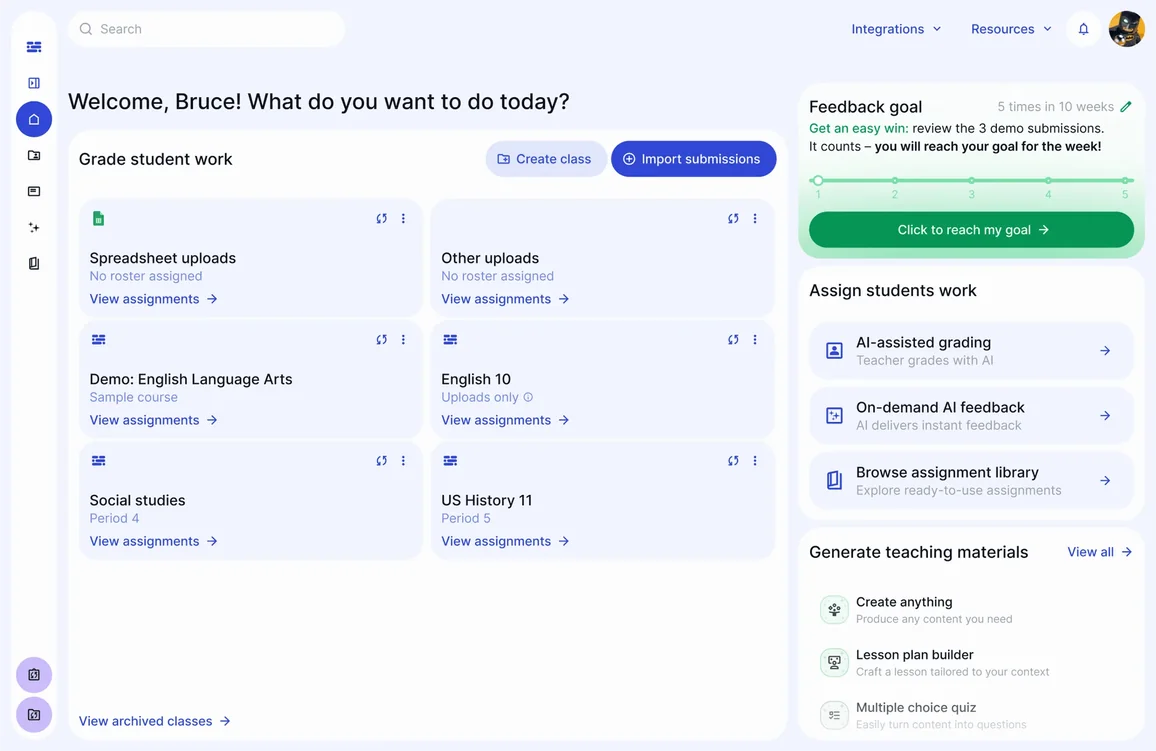
Leverage AI tools: Implementing an AI teacher's assistant eliminates evening grading burdens and restores work-life balance.
Elevate educator voice: Integrating teacher feedback into school leadership decisions builds long-term institutional trust.
Introduction
Developing sustainable teacher retention strategies is essential for maintaining institutional stability and fostering strong student achievement across Grades 3-12 classrooms. When experienced educators leave school buildings, districts lose vital institutional knowledge, student mentorship, and collaborative leadership.
Addressing modern educator attrition requires moving beyond temporary financial bonuses to transform daily working conditions. Utilizing an automated AI essay grader as a digital teacher's assistant provides immediate relief from grading backlogs, allowing school leaders to protect teacher capacity and focus on meaningful instruction.
Understanding the root causes of teacher turnover in modern schools
Rising rates of teacher turnover reflect a nationwide challenge impacting rural, suburban, and urban school districts alike. Educators frequently cite unmanageable workloads, administrative strain, and unsustainable evening hours as primary drivers of early career burnout.
Addressing the broader teacher shortage requires school leaders to evaluate how daily classroom demands affect long-term retention. Unrealistic grading expectations and isolated work environments consistently suppress professional confidence, forcing talented teachers to reevaluate their career longevity.
7 research-backed teacher retention strategies to support educators
Retaining high-quality staff demands a comprehensive framework that prioritizes educator agency, professional growth, and administrative support. Implementing these seven practical approaches helps school leaders cultivate an environment where teachers choose to stay.
1. Elevate teacher voice and educator agency
Authentic staff engagement begins when school leaders actively solicit and incorporate teacher voice in operational decisions. Conducting regular working conditions surveys allows administrators to identify specific friction points before they trigger staff resignations.
Establishing collaborative committees ensures educators have direct input on curriculum selection, assessment policies, and scheduling. When teachers realize their feedback directly shapes school policy, professional buy-in and institutional trust increase significantly.
2. Implement structured instructional coaching and mentorship
Comprehensive onboarding programs paired with dedicated instructional coaching provide essential support during critical career transitions. Pairing early-career educators with experienced mentors creates a safe environment for discussing instructional challenges and refining classroom management.
Effective coaching networks focus on continuous professional reflection rather than punitive evaluation. Providing structured, peer-led observations encourages teachers to share successful strategies and build collective instructional confidence.
3. Protect planning time and manage workload expectations
Preserving dedicated daily planning time is crucial for preventing severe educator fatigue. Teachers who constantly bring hours of grading home experience elevated stress levels that severely undermine long-term job commitment.
School administrators must establish clear boundaries regarding after-hours communications and non-instructional duties. Shielding teachers from unnecessary clerical tasks directly improves daily morale and classroom performance.
4. Foster a supportive school culture and recognition system
Cultivating a positive school culture relies on acknowledging the daily dedication of faculty members. Formal recognition programs, peer appreciation boards, and monthly celebrations build a supportive climate across the entire campus.
Consistent verbal praise and public acknowledgment of teacher efforts reinforce professional purpose. Recognizing both classroom milestones and personal accomplishments creates a community where educators feel genuinely valued.
5. Provide targeted professional development and career pathways
Meaningful professional learning opportunities enhance educator efficacy and support long-term job satisfaction. Offering tailored workshops aligned with teacher goals prevents professional stagnation and encourages continuous skill refinement.
Creating clear pathways for leadership allows talented educators to expand their influence without leaving the classroom. Master teacher roles, curriculum lead positions, and peer coaching assignments provide rewarding advancement opportunities.
6. Streamline administrative burdens using an AI teacher's assistant
Routine essay evaluation creates immense administrative friction that consumes evenings and weekends. Implementing specialized instructional support tools automates repetitive feedback tasks while maintaining rigorous academic standards.
Adopting automated grading technology reduces feedback delivery times from weeks to minutes while preserving complete teacher oversight. At DREAM Charter Schools, implementing automated feedback tools achieved a 0.77 quadratic weighted kappa (QWK) alignment with human master scorers, proving that digital tools can deliver accurate, reliable support without compromising quality.
Teachers can also use rubric generators to create consistent evaluation criteria and reduce grading time.
7. Prioritize educator well-being and flexible working conditions
Supporting physical and mental health requires creating intentional spaces for rest and professional reflection. Providing designated staff wellness areas and access to wellness resources helps educators manage daily emotional demands effectively.
Flexible scheduling options and streamlined administrative meetings demonstrate respect for teacher time. Prioritizing well-being transforms the workplace into a sustainable environment where teachers can thrive throughout their careers.
Learn how deploying a digital teacher's assistant platform can eliminate hours of weekly essay grading for your department.
Reduce burnout and improve working conditions with EnlightenAI
Managing heavy grading loads while delivering individualized feedback creates severe burnout that drives talented educators away from teaching. Our digital teacher's assistant automates initial draft evaluations so your faculty can reclaim their evenings and focus on high-impact student mentoring.
Start with the assignments already on your desk. Get started for free.
FAQs: Teacher Retention Strategies
The most effective strategies focus on elevating educator voice, protecting dedicated planning time, providing structured mentorship, and deploying automated tools to reduce administrative workloads. Improving daily working conditions directly boosts teacher satisfaction and long-term commitment. Explore how feedback frameworks improve teacher satisfaction in our guide on teacher voice.
High teacher turnover disrupts instructional continuity, eliminates experienced student mentors, and reduces overall school community stability. Schools with stable faculties achieve stronger academic outcomes and foster deeper student engagement. Read more about structural strategies to stabilize classrooms in our analysis of teacher turnover.
Unmanageable class sizes, excessive paperwork, lack of administrative support, and severe time poverty are primary drivers of educator burnout. Addressing operational friction points restores work-life balance and protects teacher capacity. Discover how clear rubric design streamlines teacher workload in our breakdown of working conditions.
An AI teacher's assistant automates routine essay grading and generates detailed feedback drafts in seconds, saving educators hours of tedious after-hours labor. Eliminating grading backlogs allows teachers to maintain healthy boundaries and prevent burnout. Learn more about automated support in our article on addressing the teacher shortage.