Mike Harbaugh

Introduction
One of the benefits of working with teachers across the country is that we get the opportunity to see how thousands of educators are using EnlightenAI to structure, strengthen, and streamline their teaching.
We regularly talk to high-impact teachers about how they’re using rubrics and what helps them move faster, give clearer feedback, and build stronger writers. As the new year begins, we wanted to share a few of the recurring themes we see so more classrooms can benefit from what’s working.
Different rubrics for different moments in learning
Many EnlightenAI power users rely on different rubrics depending on the purpose of the assignment and where students are in the writing process.
For in-class writing or daily exit tickets, teachers often use a very simple, binary rubric. A zero or a one. Did the student demonstrate understanding of a specific concept or not? This makes it easy to quickly gather data, identify gaps, and decide what to reteach.
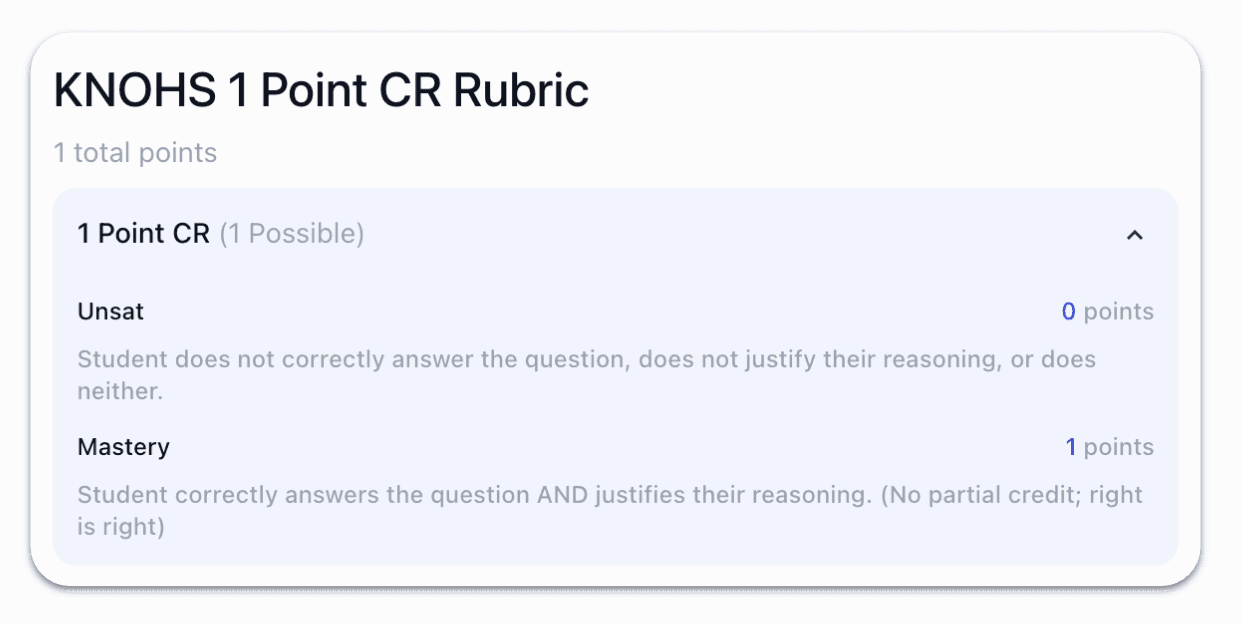
The simple rubric above was used by a teacher to assess two specific criteria: correctly answering an exit ticket question and justifying that answer.
Best Practice 1: Use a simple rubric for simple exit ticket assignments.
We also see many strong teachers create checklist-style rubrics in EnlightenAI, especially when building foundational writing skills. These rubrics may include many criteria, but each one is concrete and observable. Did the student include a transition word? Did they introduce evidence correctly? Did they follow the structure practiced in class?
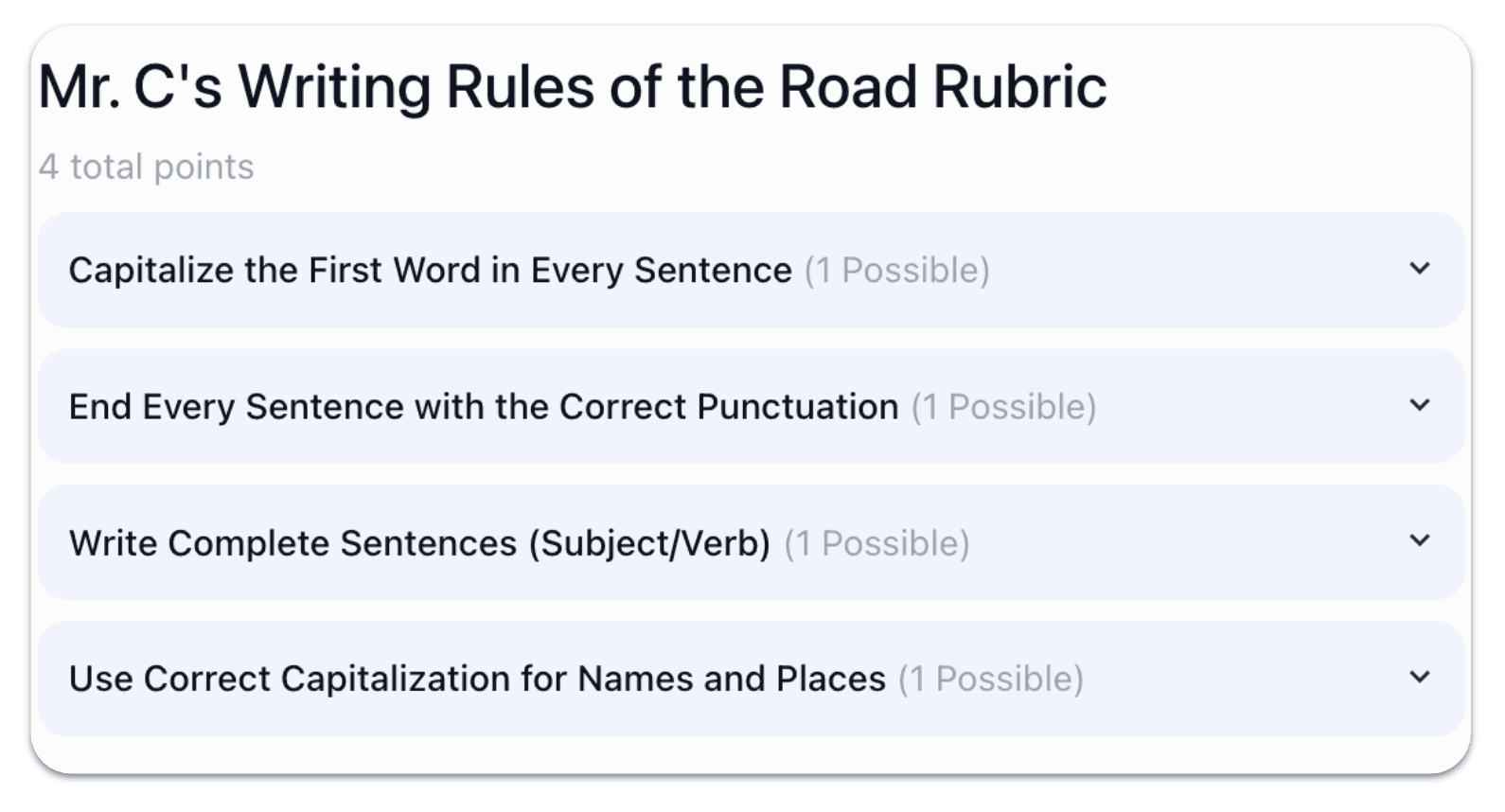
We frequently hear from primary school teachers that a clear binary rubric like the "rules of the road" example above helps students focus. Thin this example these are four skills that the teacher was focusing on during this unit. This rubric helped keep feedback targeted and on-topic for his students.
Best Practice 2: Simple, binary checklist rubrics are great for developing writers.
During the writing process for larger assignments, we also often see teachers intentionally simplify. Instead of introducing a full, complex rubric too early, they use a pared-down version focused on just a few priority skills. Students know the full rubric is coming at the end, but the simplified version helps guide feedback while they are still drafting and revising.
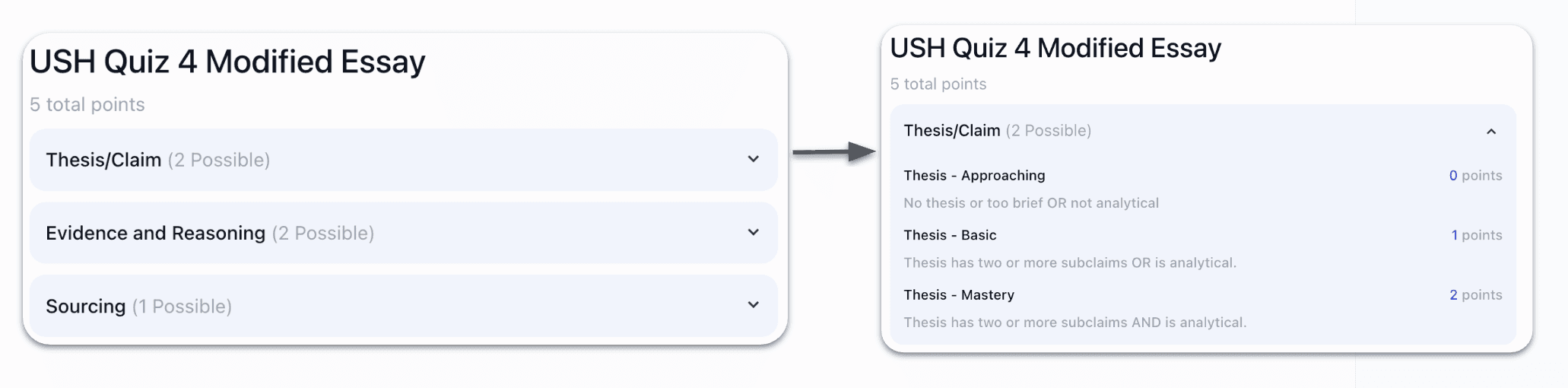
The simplified rubric above focuses on three key skills for an AP U.S. History writing assignment while using streamlined scoring criteria to keep students focused on the fundamentals. A simpler rubric during the drafting phase can make feedback more digestible and actionable.
This teacher does not use the full AP U.S. History rubric until students have had time to practice and grow with simplified rubrics. The official rubric is then used during practice test sessions and to help students track their progress toward the AP scores they are aiming to achieve.
Best Practice 3: Ramp up the complexity of rubrics over the course of longer-term writing projects.
Make the rubric a shared language with students
Great teachers do not treat rubrics as a private grading tool. They share them. They talk about them. They explain what the scores mean.
We often hear from experienced teachers that they walk students through how a rubric is used with EnlightenAI, explain how changes to the rubric affect the feedback their AI grading assistant provides, and discuss as a class why a sample piece of writing earned a particular score. They clarify what a five out of five represents and talk through what differentiates it from a three or a four.
When rubrics are transparent, students are better able to interpret feedback, self-assess their work, and revise with purpose. Over time, the rubric becomes a shared language in the classroom rather than something revealed only after grading.
Best Practice 4: Share rubric and get buy-in from students about how you use them.
Adapt existing rubrics and use AI to save time
Our power user teachers consistently lean on existing resources instead of starting from a blank page.
The EnlightenAI Rubrics Library is a common starting point, offering AP rubrics, state-aligned rubrics, and other widely used templates. Many teachers copy an existing rubric and then edit, condense, or adjust it to fit their specific context. You can always click “Copy to my rubrics” to begin customizing a rubric for your class.
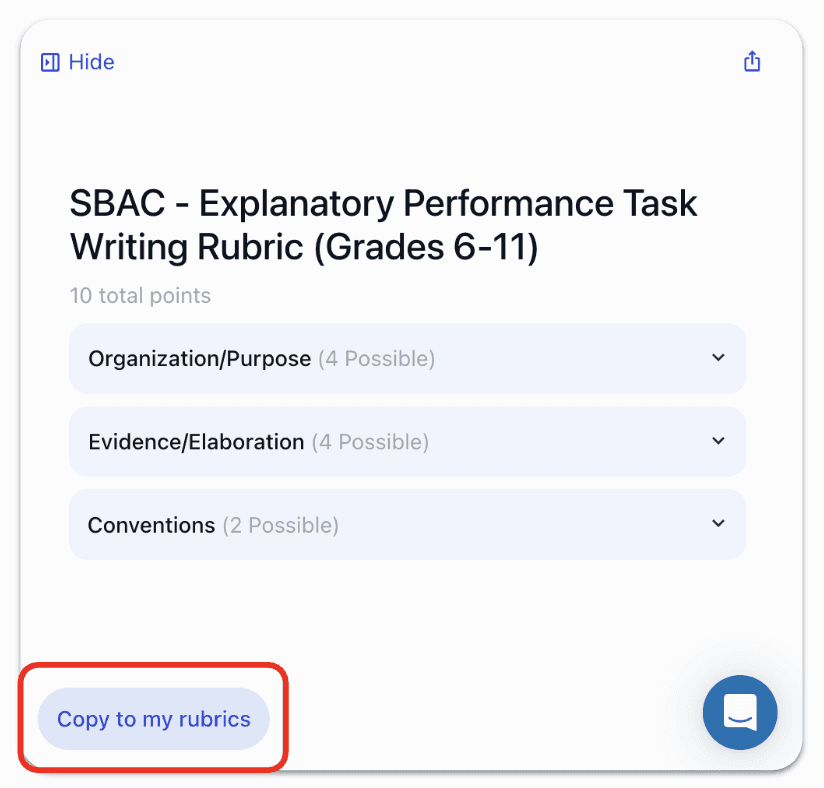
Best Practice 5: Copy and adjust rubrics from the Rubrics Library instead of building from scratch.
We also see many power users relying on the Generate Rubric with AI feature when they need a rubric quickly for a tactical purpose, such as a daily exit ticket or a short assignment. Instead of drafting from scratch, teachers generate a solid first version and then refine it based on their instructional goals and students’ needs:

If you want a quick tutorial on creating rubrics with AI, you can find one here!
Best Practice 6: If you build from scratch, use our AI generator to save time.
Reuse what works instead of reinventing every time
The final pattern we consistently see among power user teachers is what we like to call strategic consistency. While these teachers occasionally create or adapt rubrics for specific lessons, they are not creating new rubrics for every assignment.
Instead, they develop a small set of go-to rubrics that they rely on again and again. One for exit tickets. One for short, daily writing. And consistent rubrics aligned to state standards or AP courses. Over time, these rubrics become familiar to both teachers and students, helping establish clear expectations and a shared language around writing.
This approach is especially powerful for developing writers. Feedback becomes clearer, more actionable, and easier for students to apply.
Best Practice 7: Develop a small, go-to set of rubrics for general use.
—
If you are interested in exploring or adapting rubrics that other teachers are using successfully, you can browse our rubrics library or try generating one with AI and making it your own.
Get in touch with us at support@enlightenme.ai if you have best practice to share, or want to to talk through how other teachers in similar classrooms are approaching this work!
A rubric that works for human graders works better for AI graders
The common assumption is that AI grading tools need simpler rubrics. The opposite is true, the more precise your descriptors, the more consistent and accurate the output becomes. Expert rubric design isn't just good teaching practice. It's what separates AI-graded scores you can trust from scores you have to second-guess.
Load your strongest rubric and see what it produces, try the AI grading tool today.
Anchor papers are the ingredient most rubrics are missing
A rubric tells the grader what to look for. Anchor papers show the grader what it looks like at each level. Teachers who include two or three examples per performance band get noticeably more consistent scoring, because the tool calibrates against real evidence, not just descriptors. The rubric sets the criteria. The anchor papers teach the standard.
Include your anchor papers and see the difference, try the AI essay grader on your next assignment.